01The origin and the brief
The project began with a completely stock 2013 S7. The aim was to retain the comfort and practicality of a full-size Audi while creating a one-of-one vehicle capable of representing the mechanical, calibration and customisation breadth of both businesses.
- Stock starting point: 420 bhp
- Four usable seats and genuine luggage space retained
- Daily-road manners remain part of the brief
- Every stage used to learn, test and refine the next
02Twin-turbo development and airflow
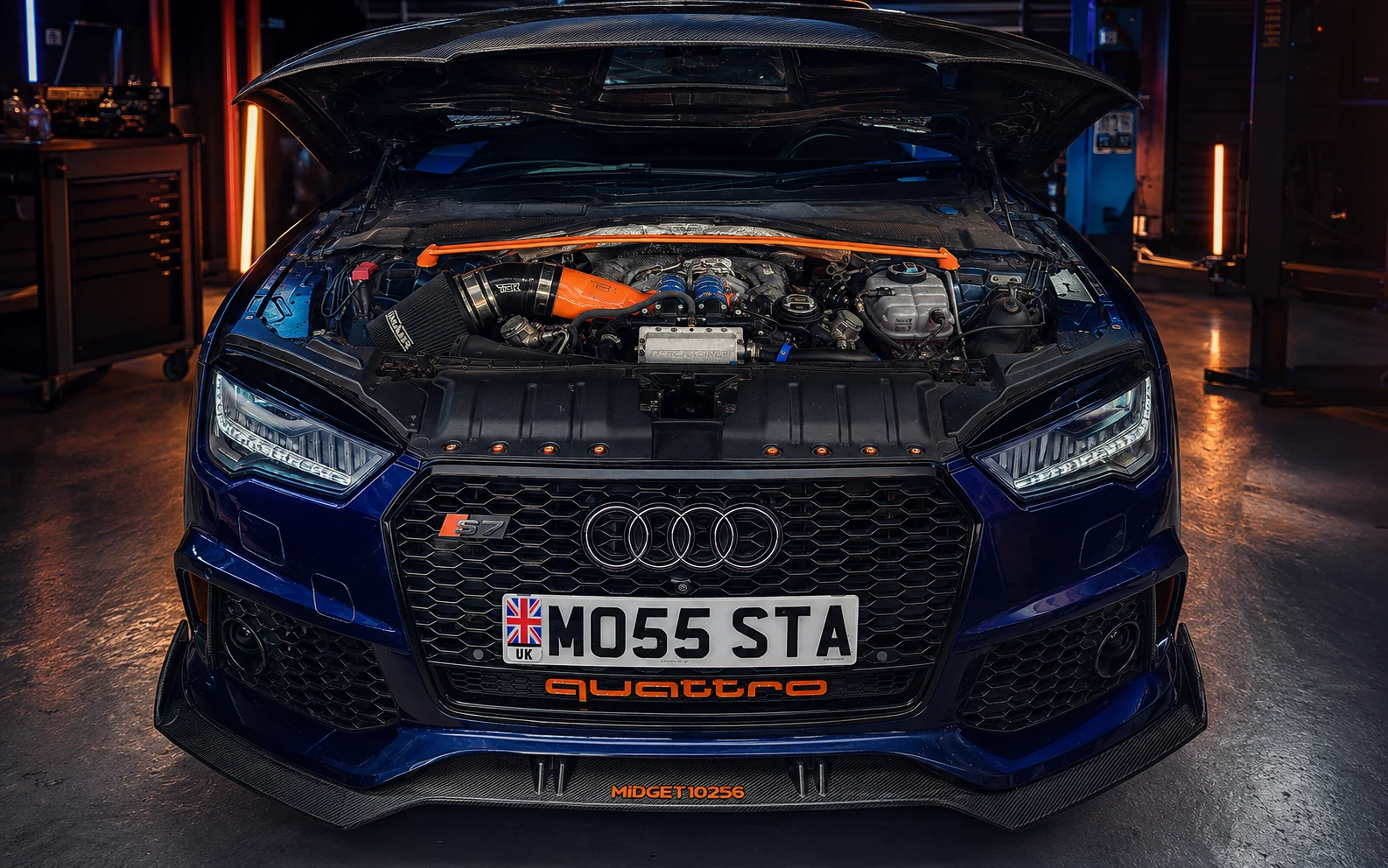
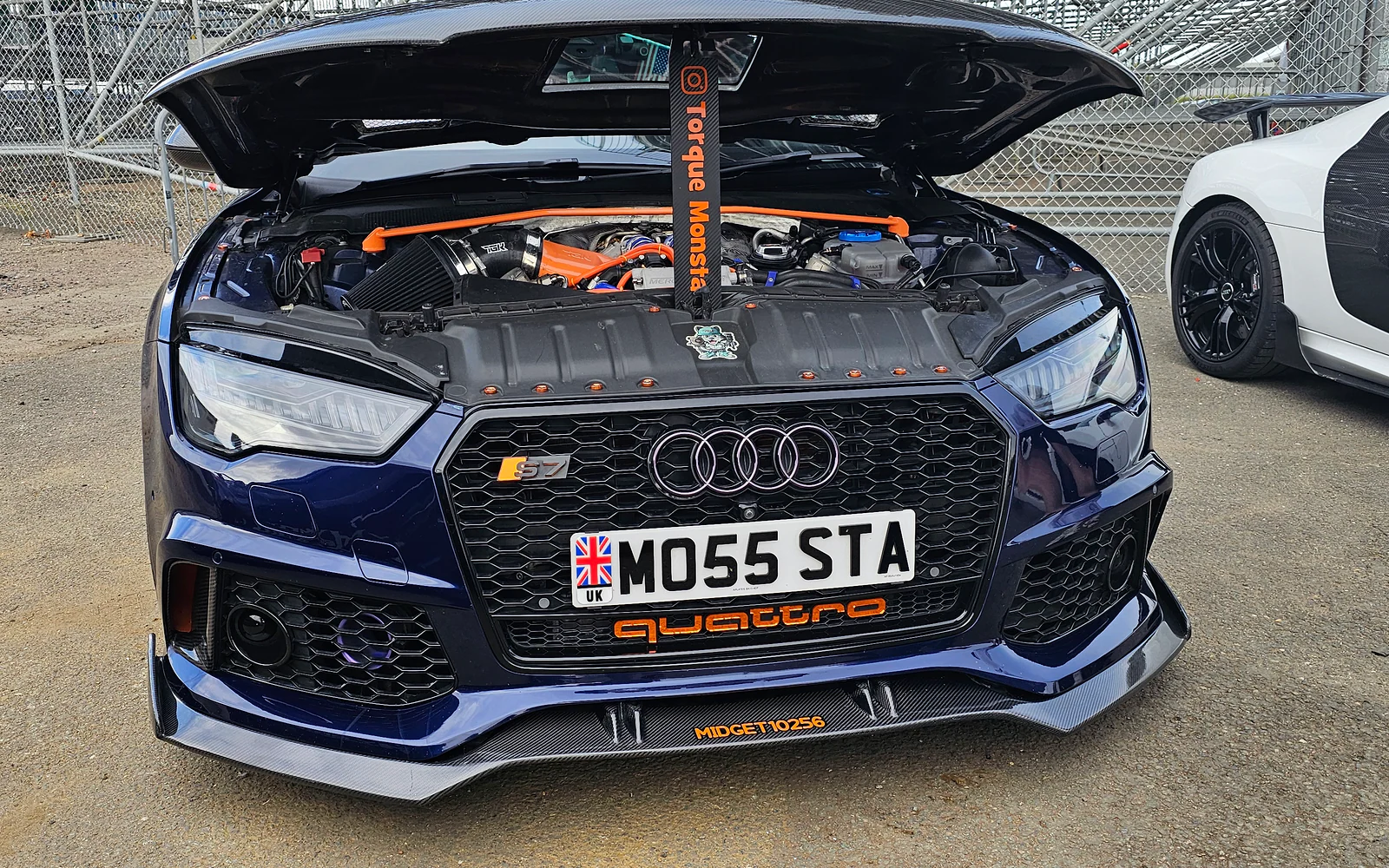
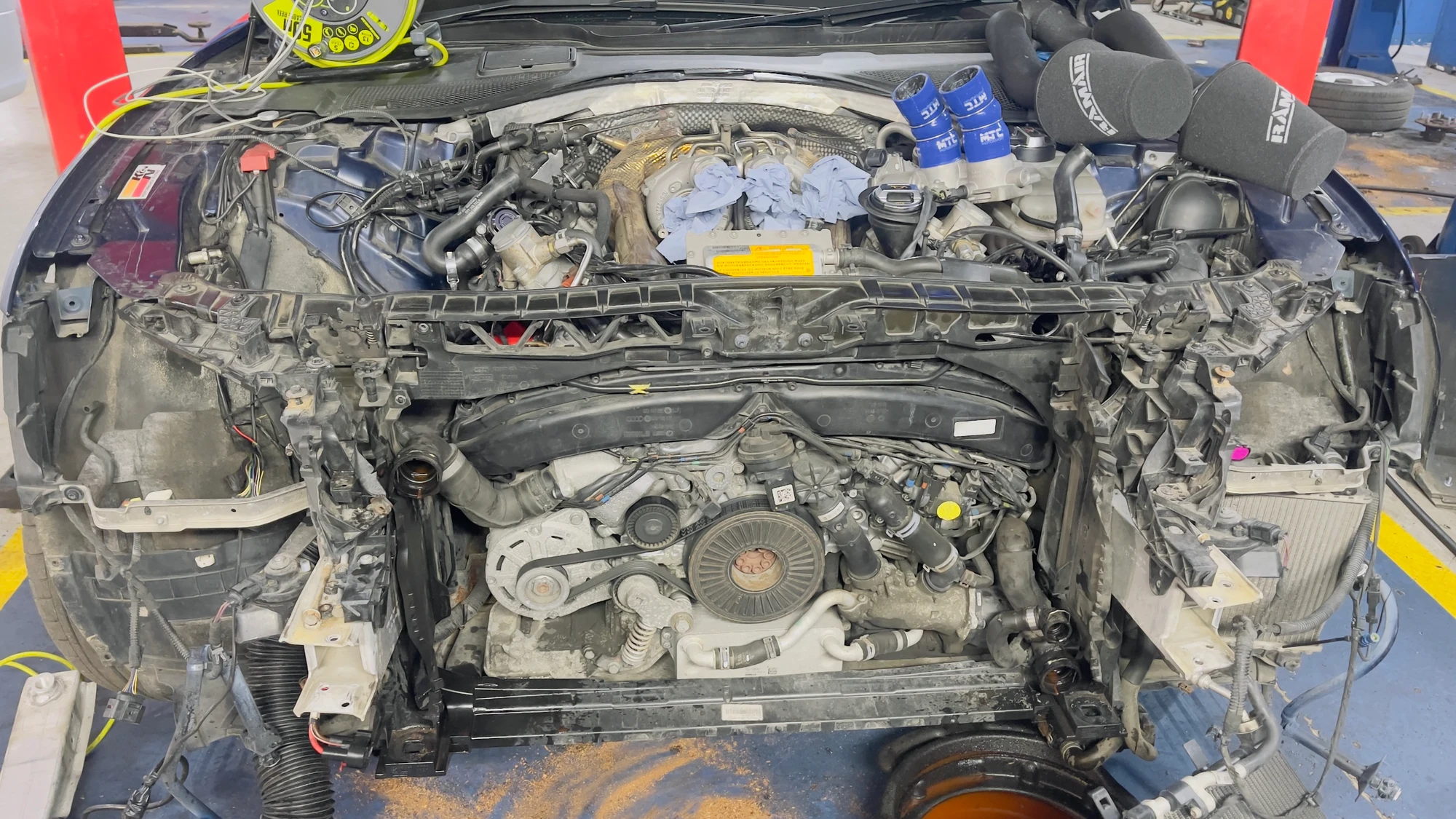
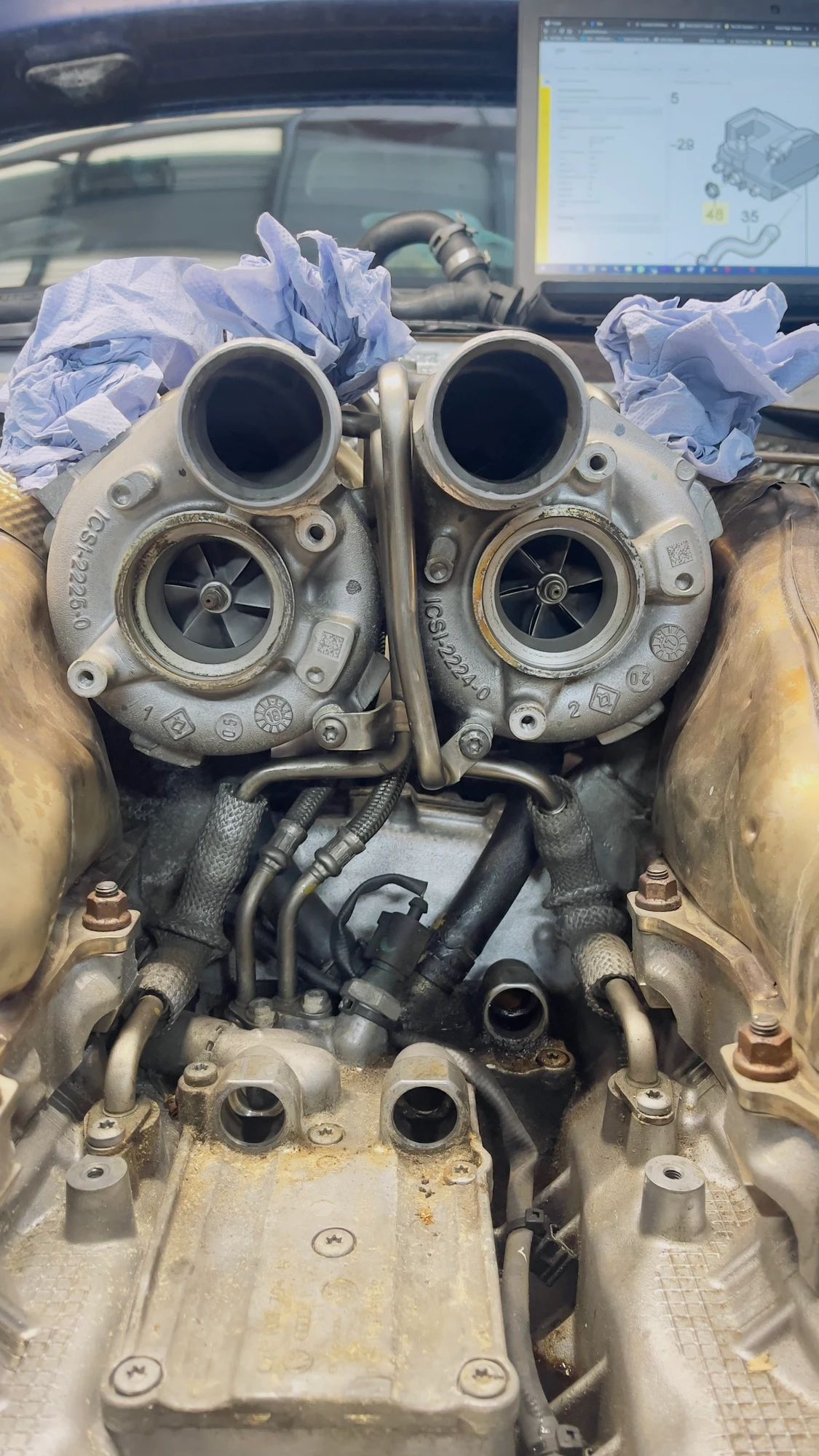
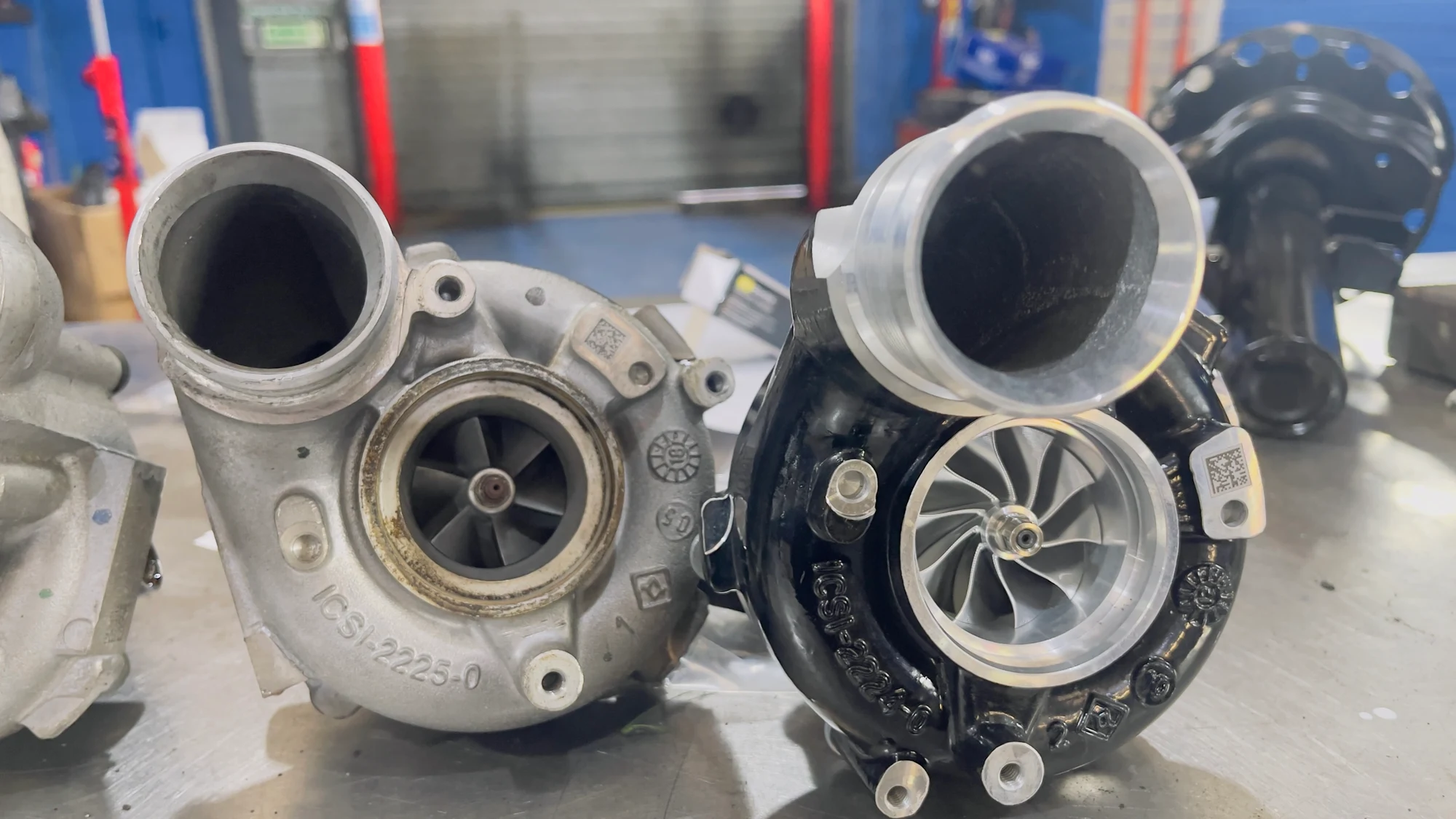
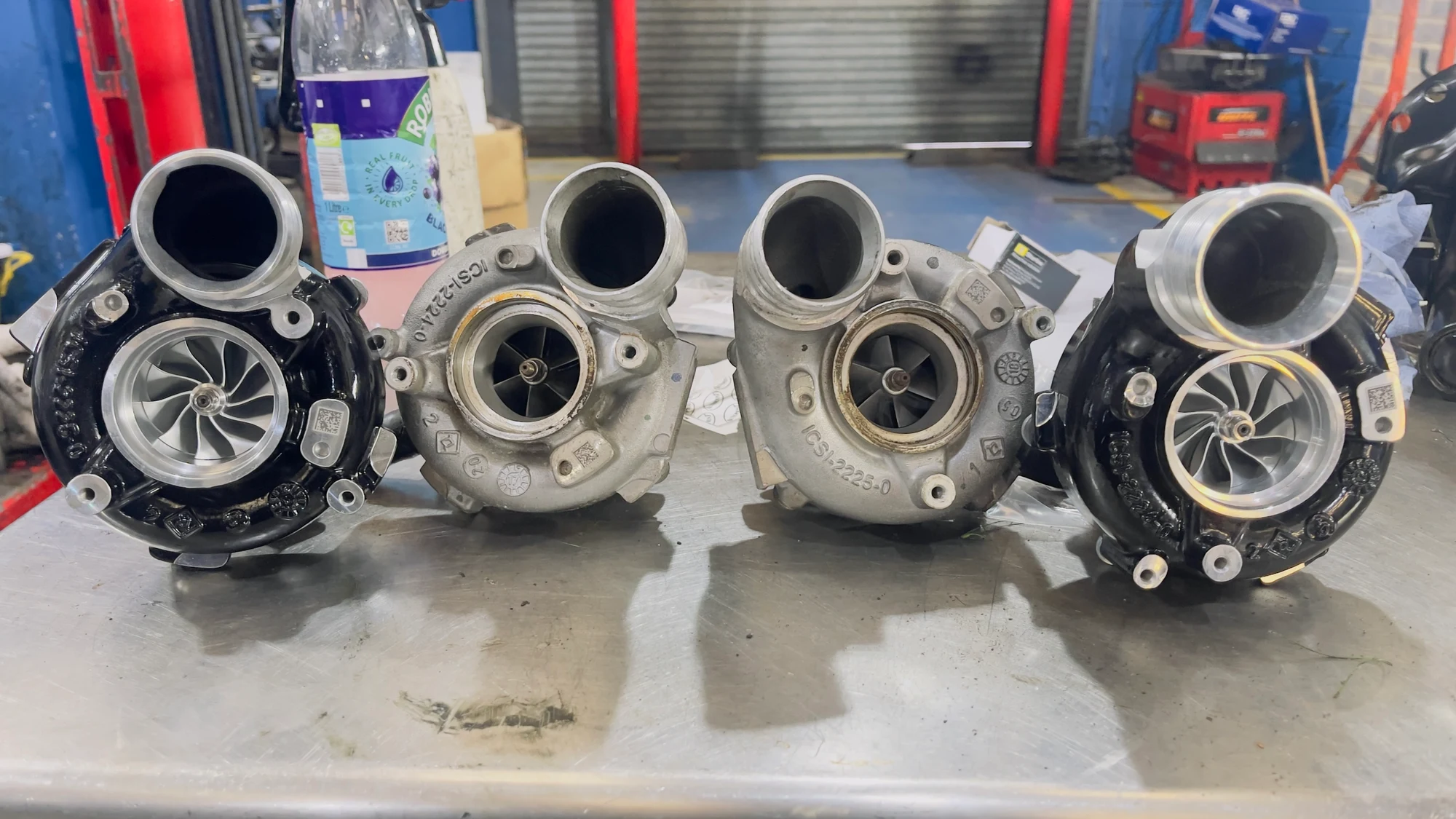
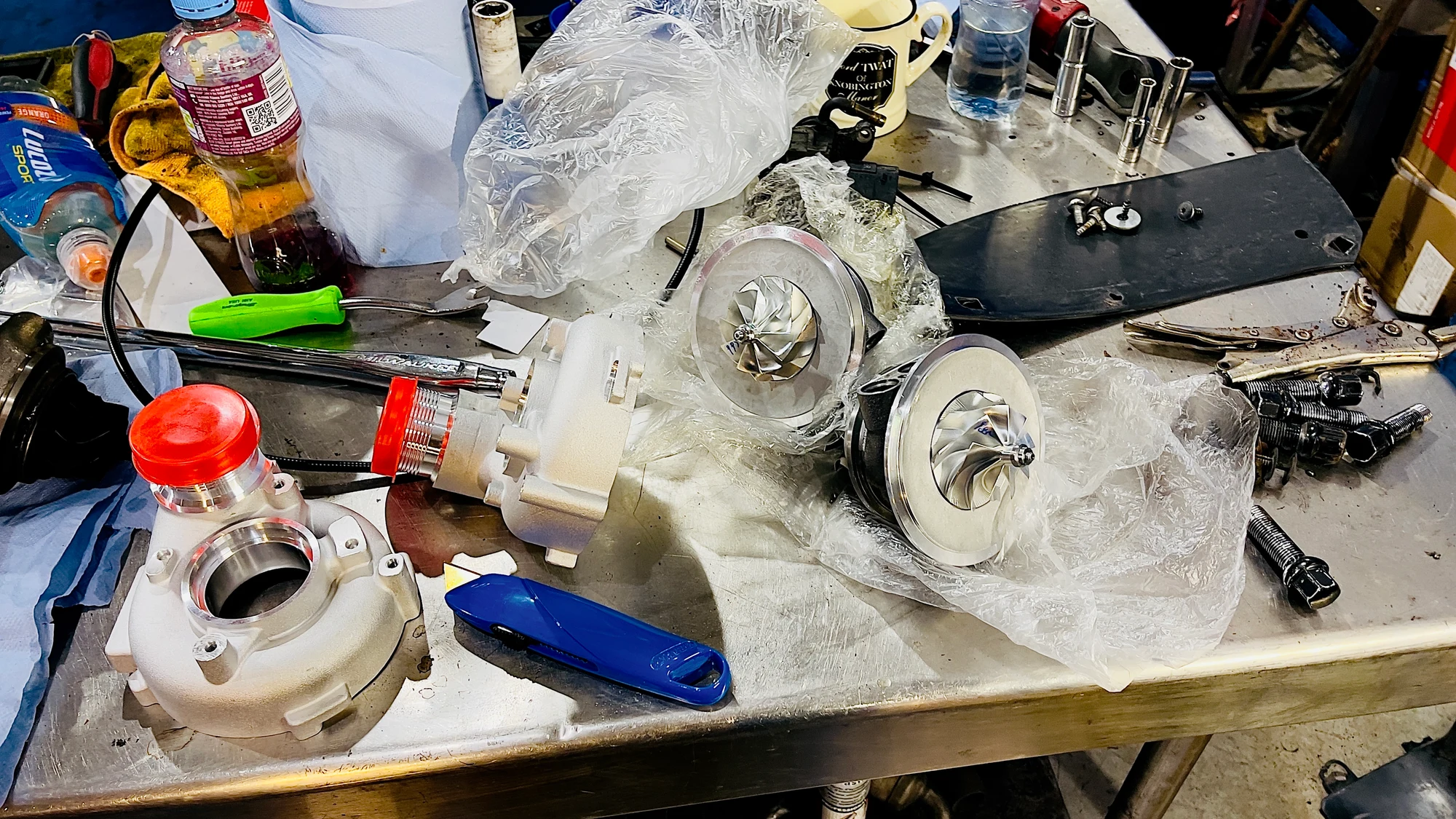
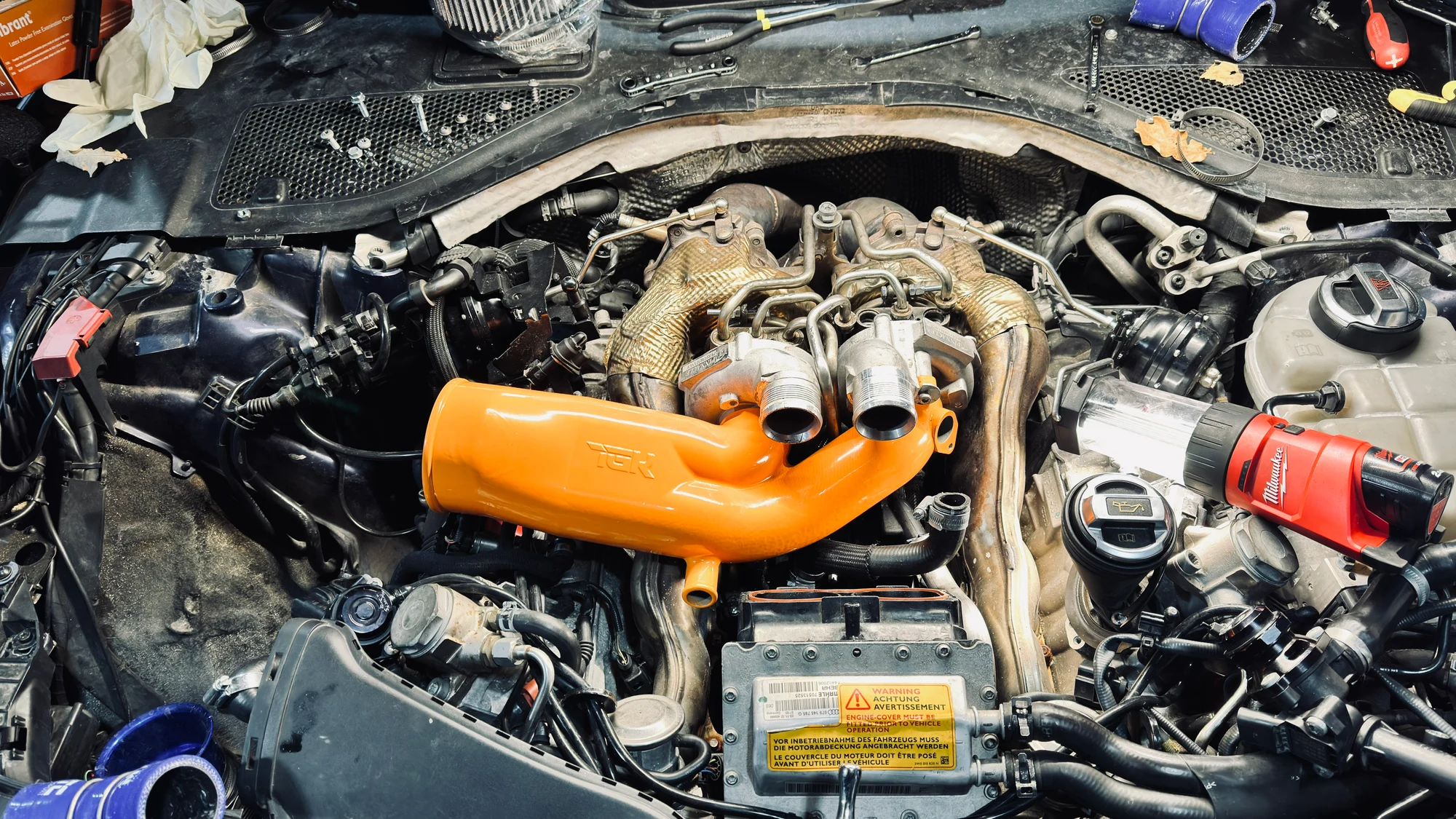
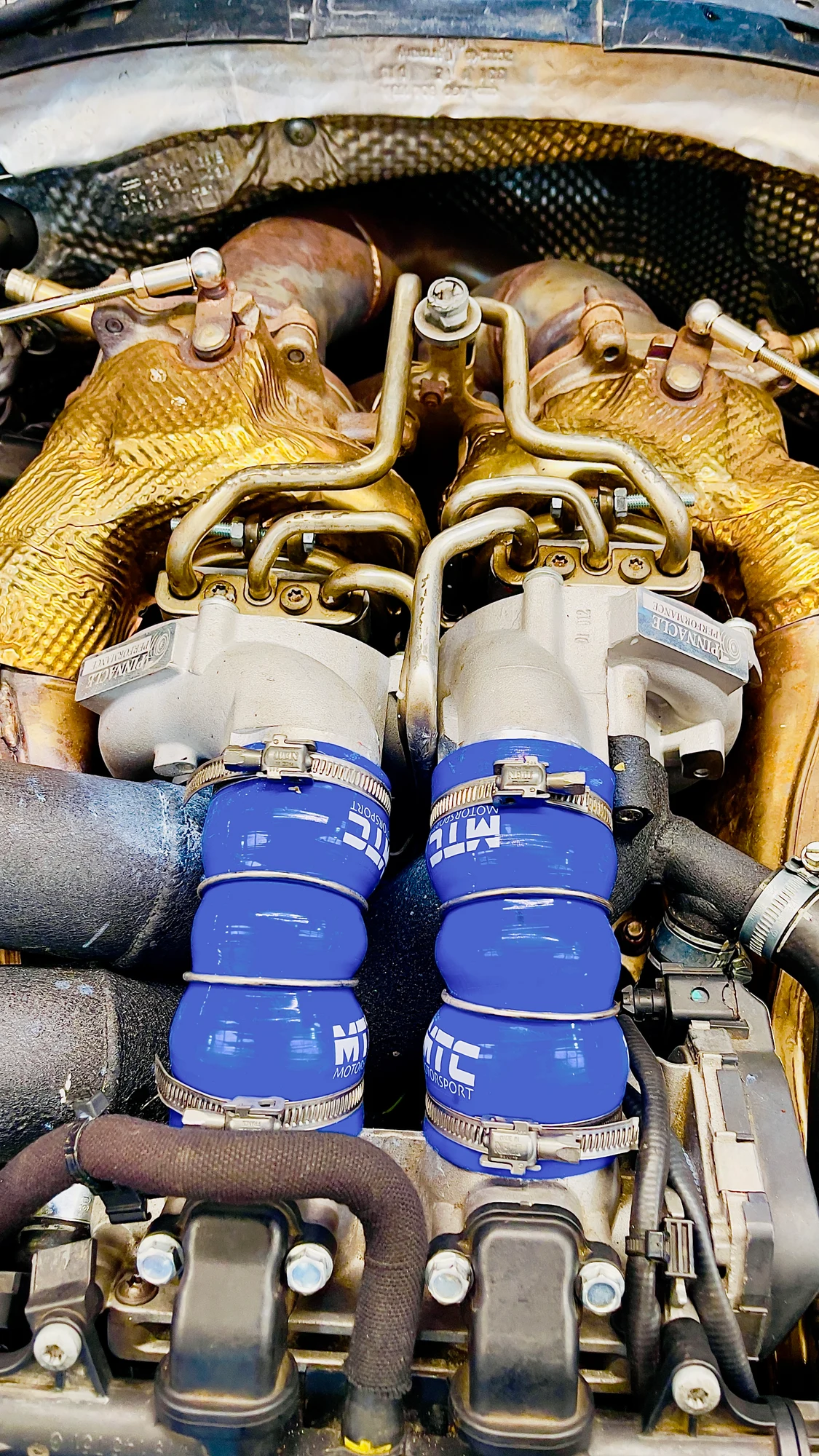
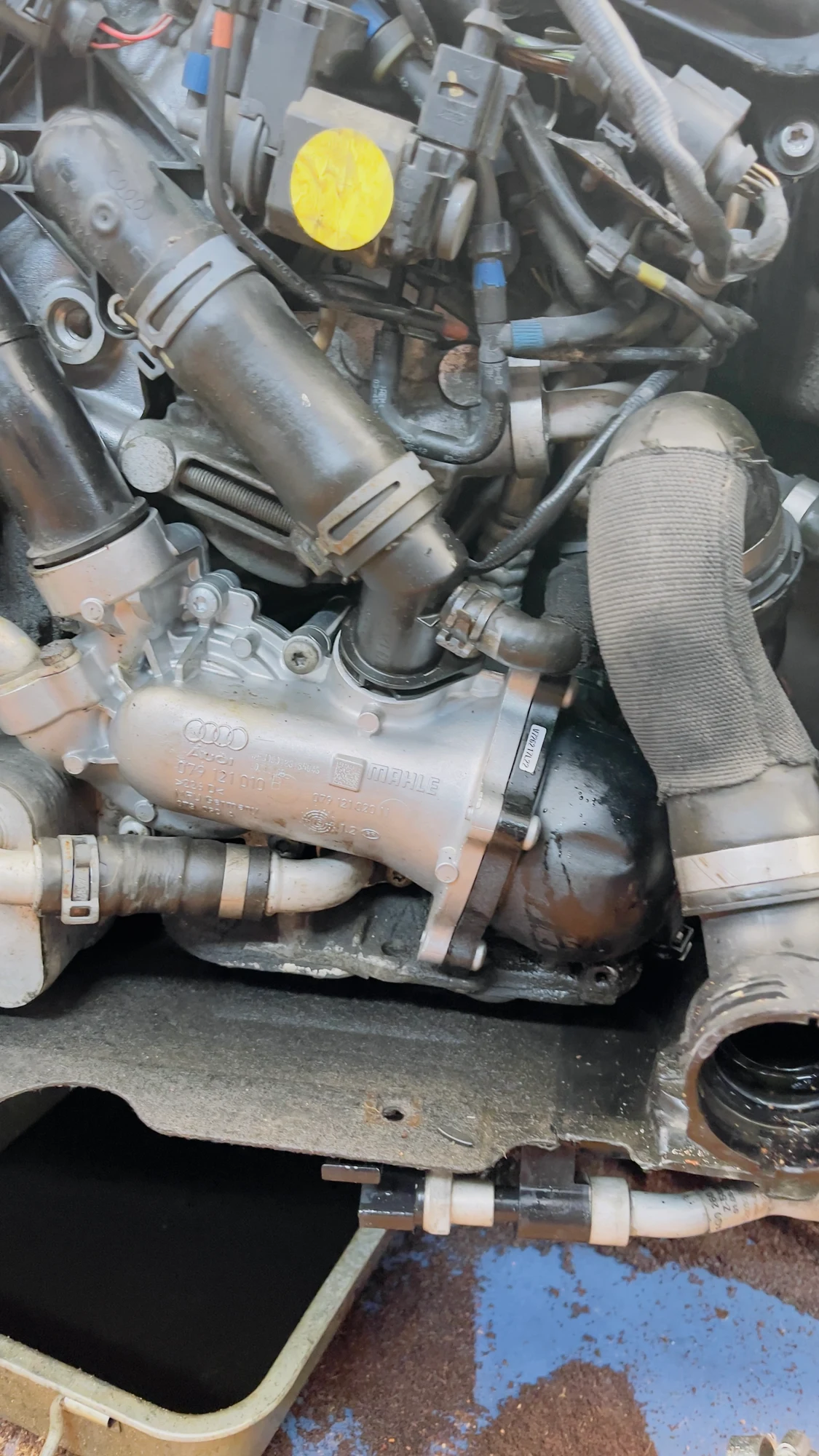
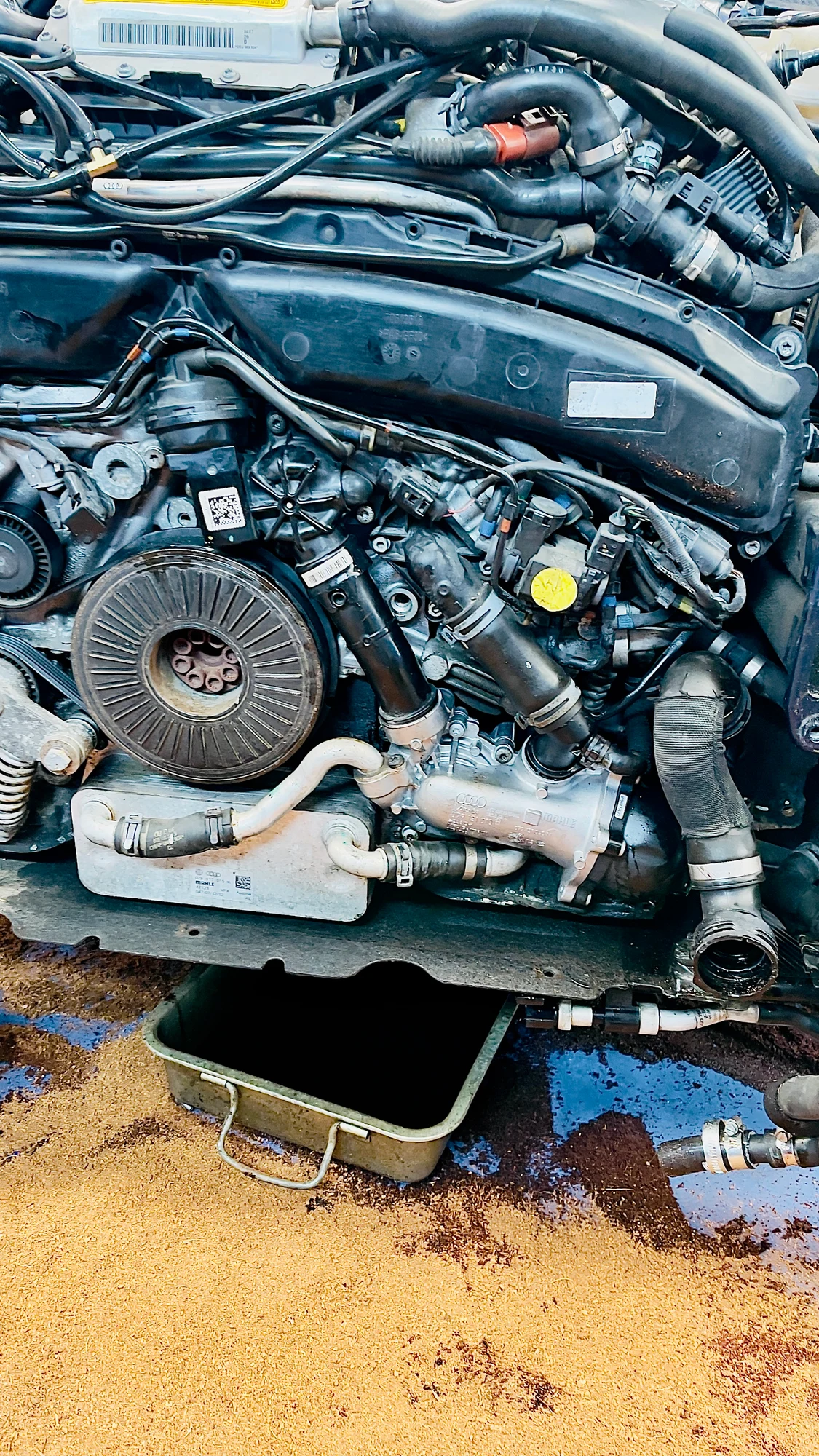
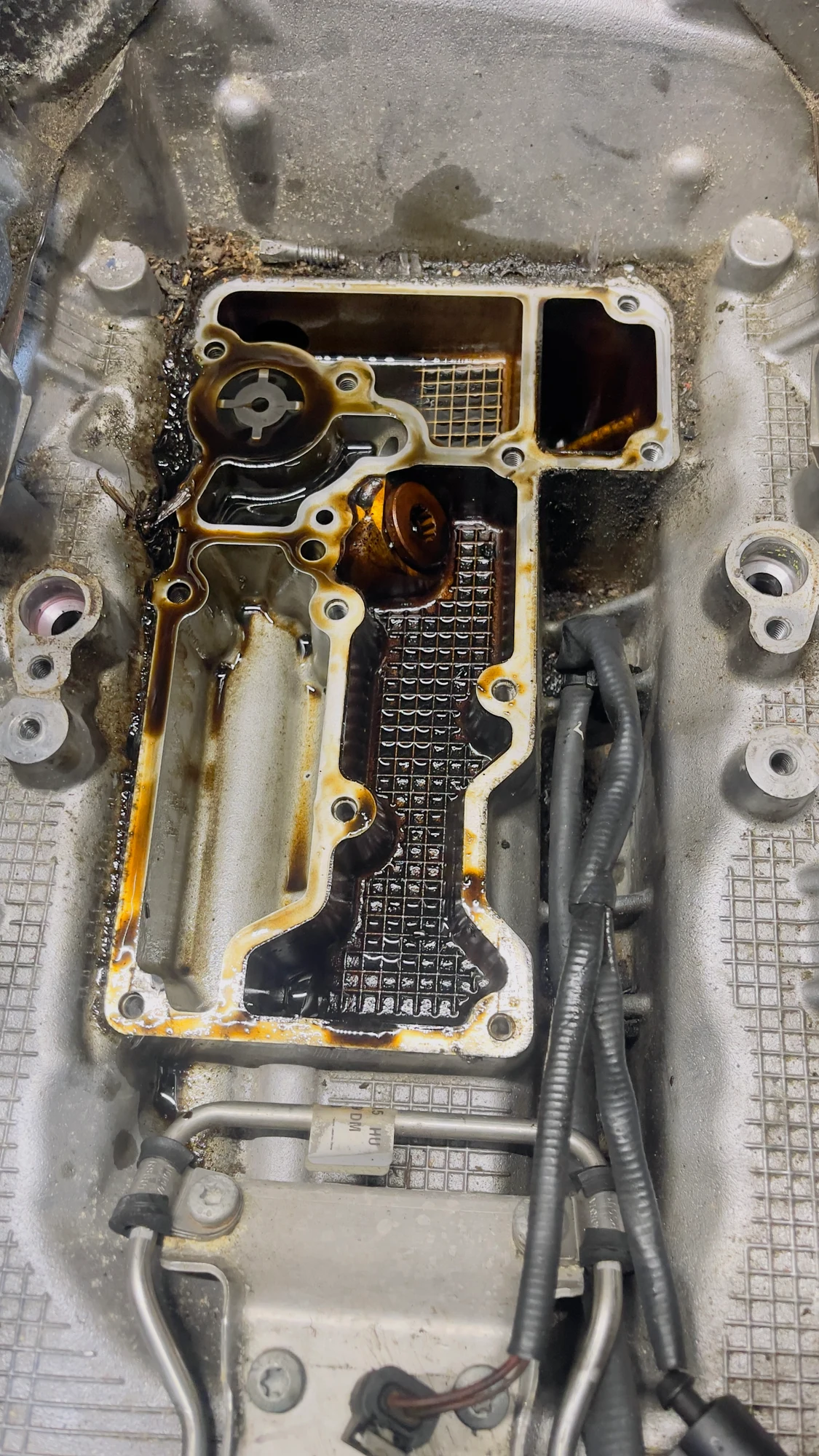
The 4.0-litre twin-turbo V8 has passed through several development configurations. The build archive records turbocharger comparisons, stripped-engine access and revised intake layouts, showing the work behind the finished engine bay. Earlier hardware in these photographs is part of the development story, not necessarily the current specification.
- Twin-turbo combinations evaluated as the project evolved
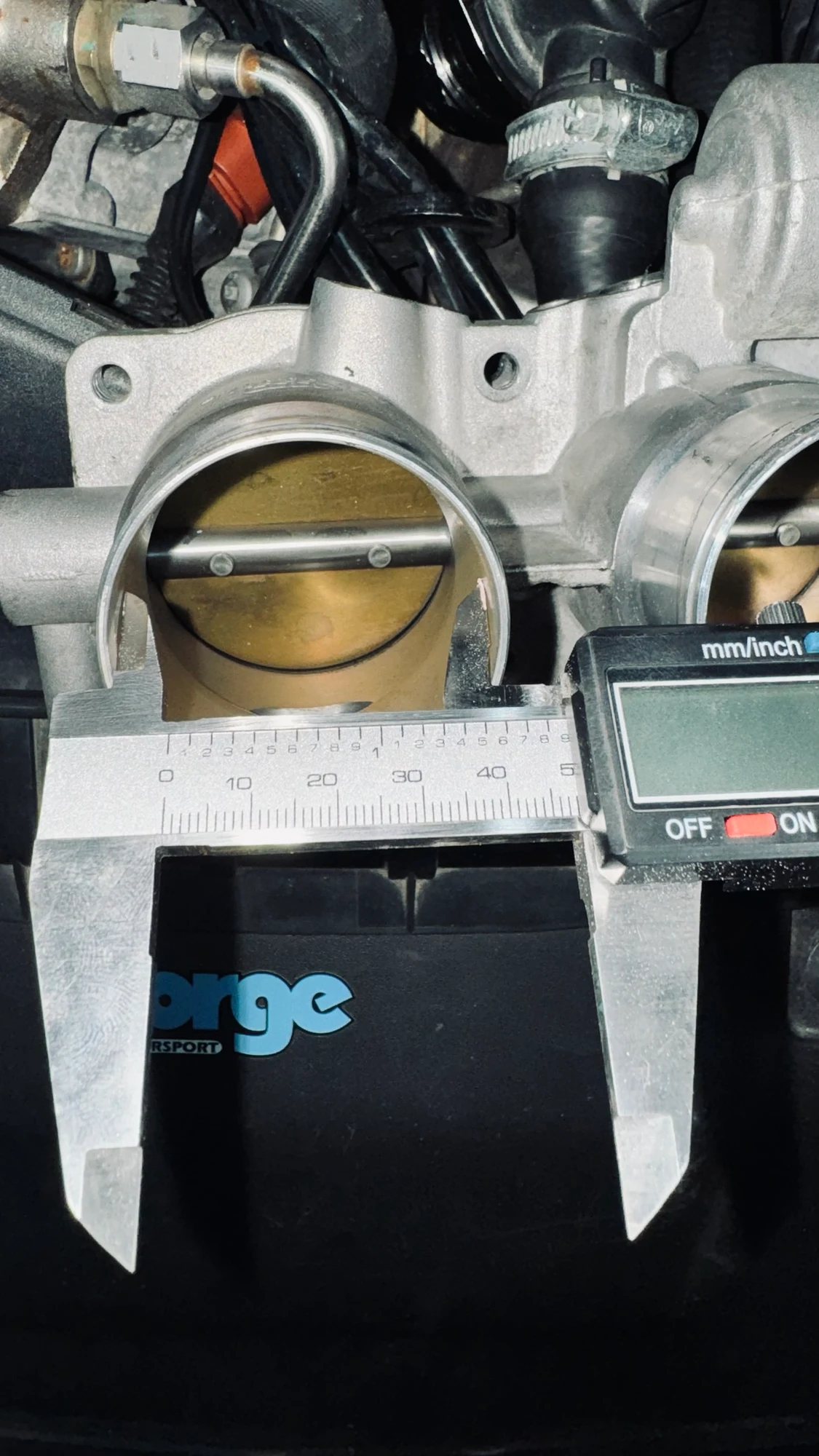
- Four-inch intake routes and enlarged throttle-body work to support airflow
- Inlet, hose and connection layouts reviewed together for fit and access
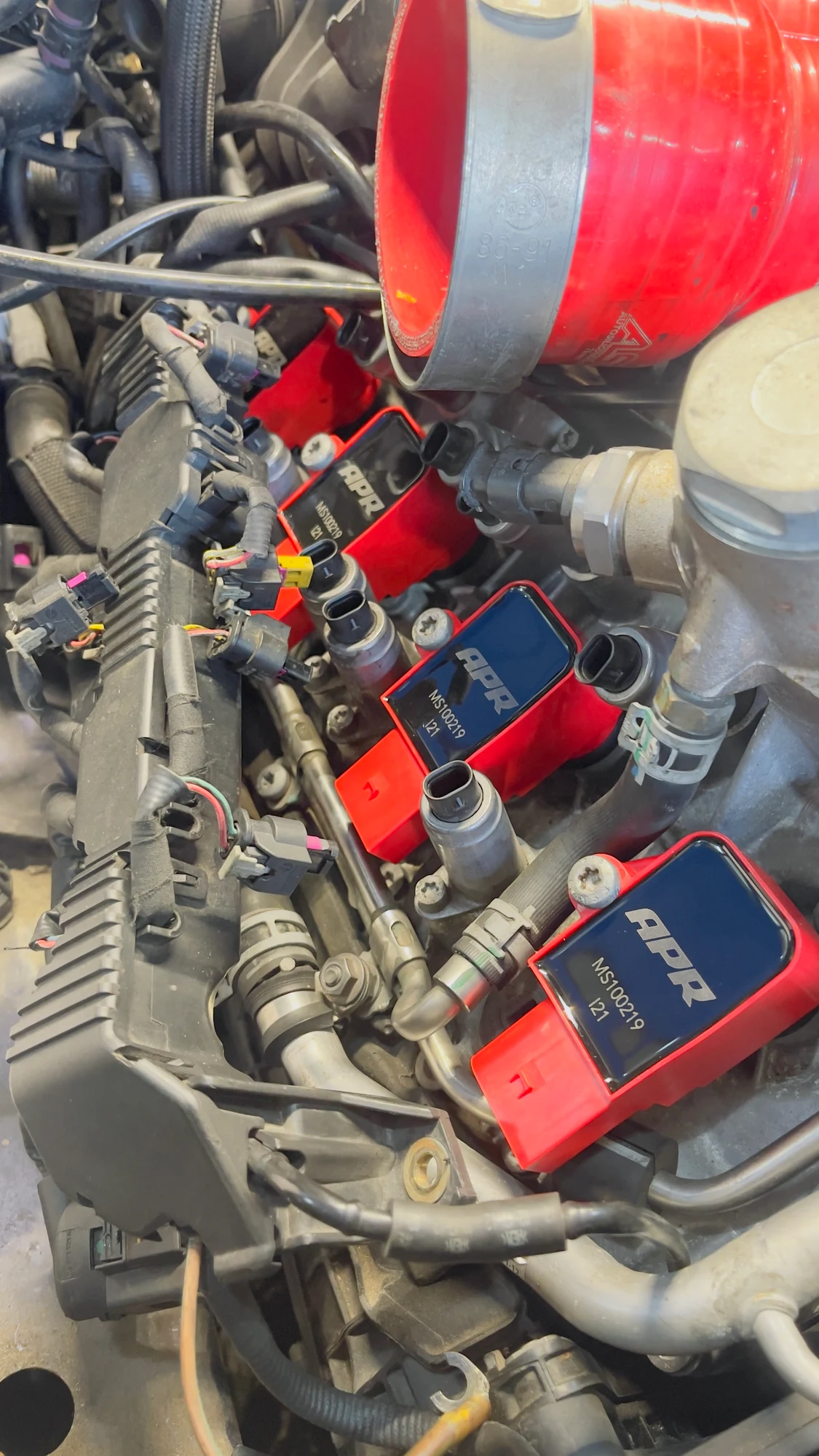
- Original process photographs show component comparison and installation stages
03Calibration, fuelling and ignition
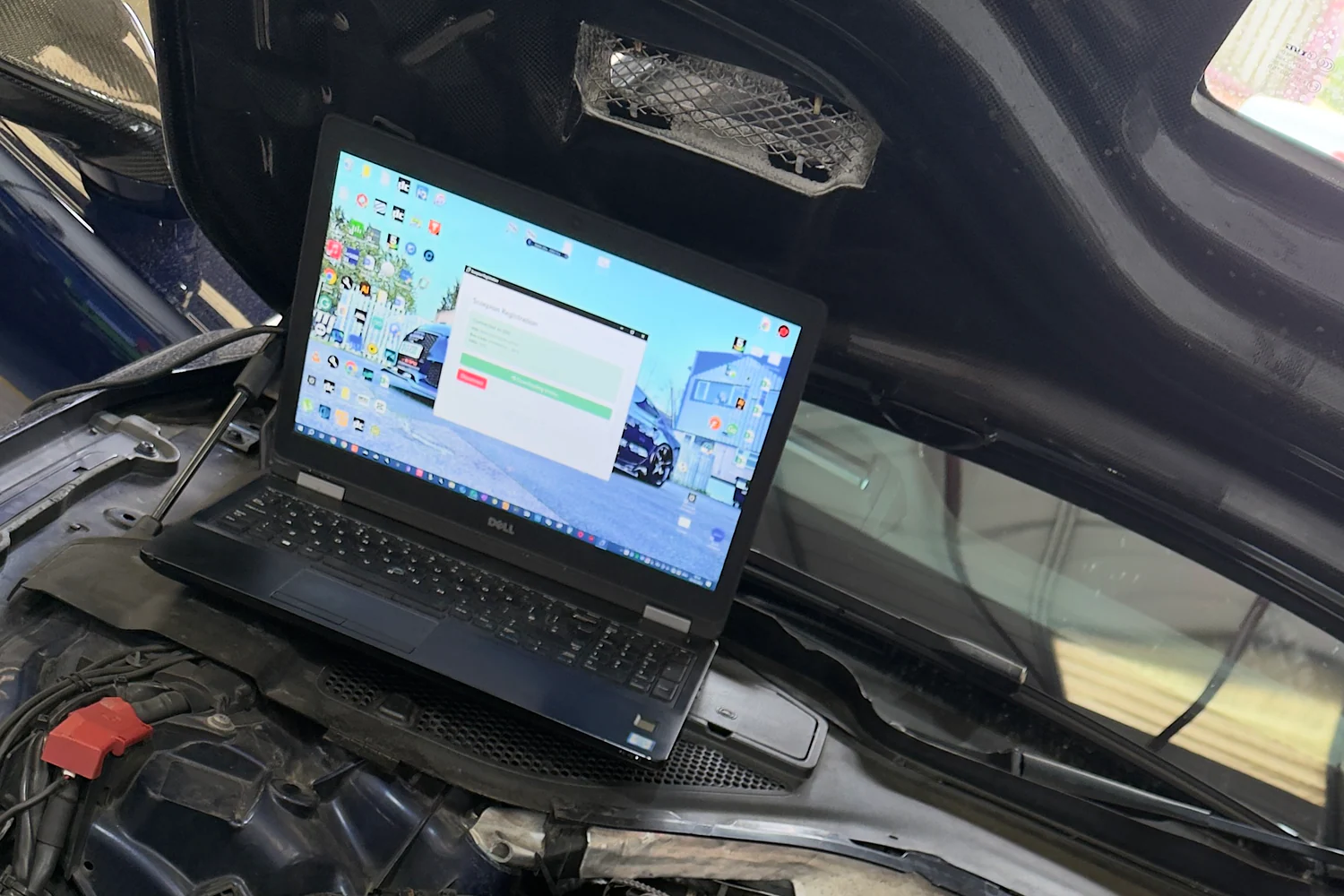
In-house Dyno Spectrum DS1 calibration brings the engine hardware together. The development process considers boost delivery, fuelling, ignition, torque management and engine-speed strategy as a connected set of decisions. The current headline is 904 hp; the magazine feature records an earlier 852 bhp chapter of the same evolving car.
- Vehicle-specific DS1 calibration developed by Ben, the Managing Director and tuning specialist
- Fuel-pump and pressure-sensor upgrades support the increased demand
- Ignition hardware and spark-plug specification considered alongside the calibration
- Logging and repeated review focus on delivery and driveability as well as peak output
04Charge cooling and heat management
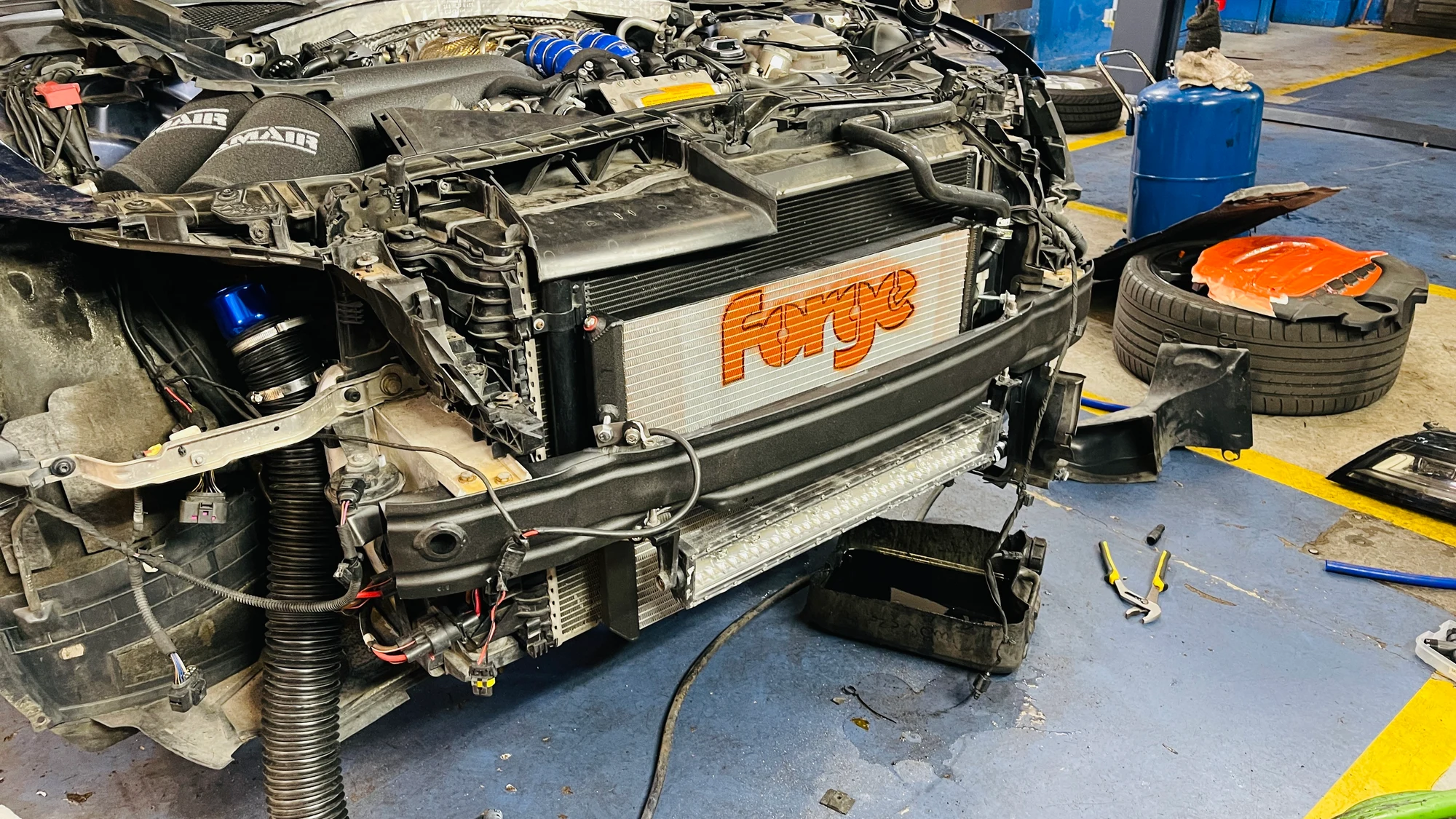
The S7’s closely packaged turbo installation makes thermal management a central part of the project. Heat-exchanger, pump and coolant-hardware changes support the charge-cooling system, while heat protection addresses the very different task of managing radiant heat around the turbochargers.
- Upgraded front heat exchanger, visible in the stripped-front photographs
- Increased coolant-pump capability and revised coolant connections
- Funk Motorsport turbo heat blankets and supporting heat protection
- Lubrication and preventative attention to known 4.0T concerns built into the development work
05Transmission and drivetrain control
The drivetrain has been developed alongside the engine rather than treated as an afterthought. Transmission calibration, mount choices and support components influence how the car delivers torque and how connected it feels under load. Firmer mounting also brings a comfort trade-off, which matters in a car that is still used daily.
- TCU calibration coordinated with the engine’s torque delivery
- Solid engine, gearbox and drivetrain mounting documented in the build
- Propshaft support and associated drivetrain hardware included in the development
- Noise, vibration and everyday refinement considered alongside response
06Brembo braking package
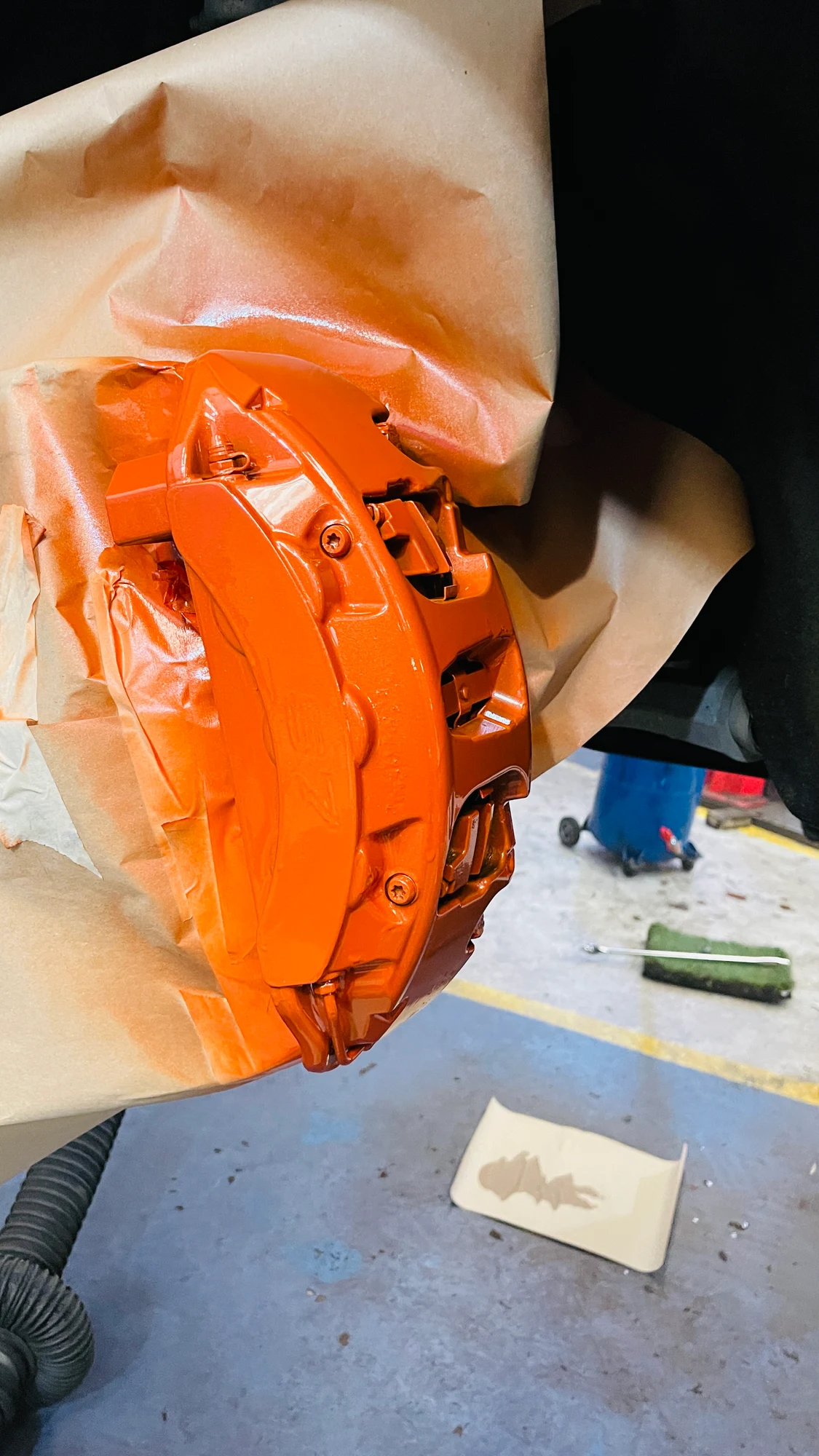
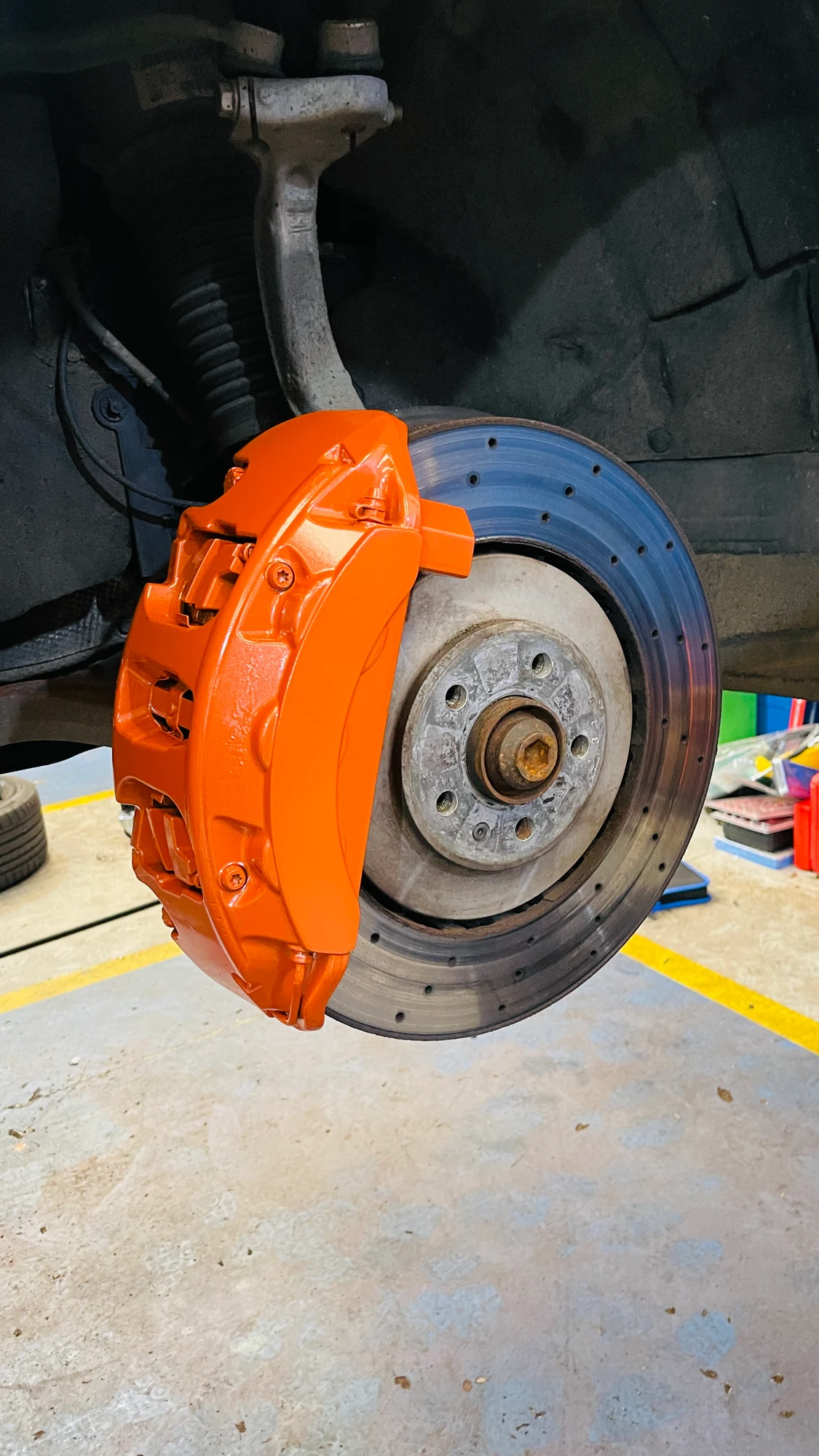
Brembo six-pot calipers are fitted at the front, paired with the larger-disc setup. The braking work goes beyond the visible caliper: discs, friction material, hoses and cooling all contribute to how the package performs and feels. Wheel clearance and the rest of the chassis have to be considered at the same time.
- Front calipers: Brembo six-piston units
- RTS discs: 400 mm at the front and 360 mm at the rear
- EBC Redstuff pads and Goodridge braided brake lines
- ECS brake-cooling ducts support the complete installation
07Air suspension, geometry and mounting
The stance is only one part of the chassis work. CETE control, TGK hardware, adjustable arms and revised bushes provide the means to set up the car around wheel fitment and its intended use. The specification balances show-car presentation with a road-driven brief.
- CETE air-suspension control with phone-based adjustment
- TGK tank upgrade and dump-box hardware
- SPC adjustable arms, TGK anti-roll bars and spherical drop links
- Powerflex Black/track bushes used within the chassis and mounting package
08Exhaust development and character
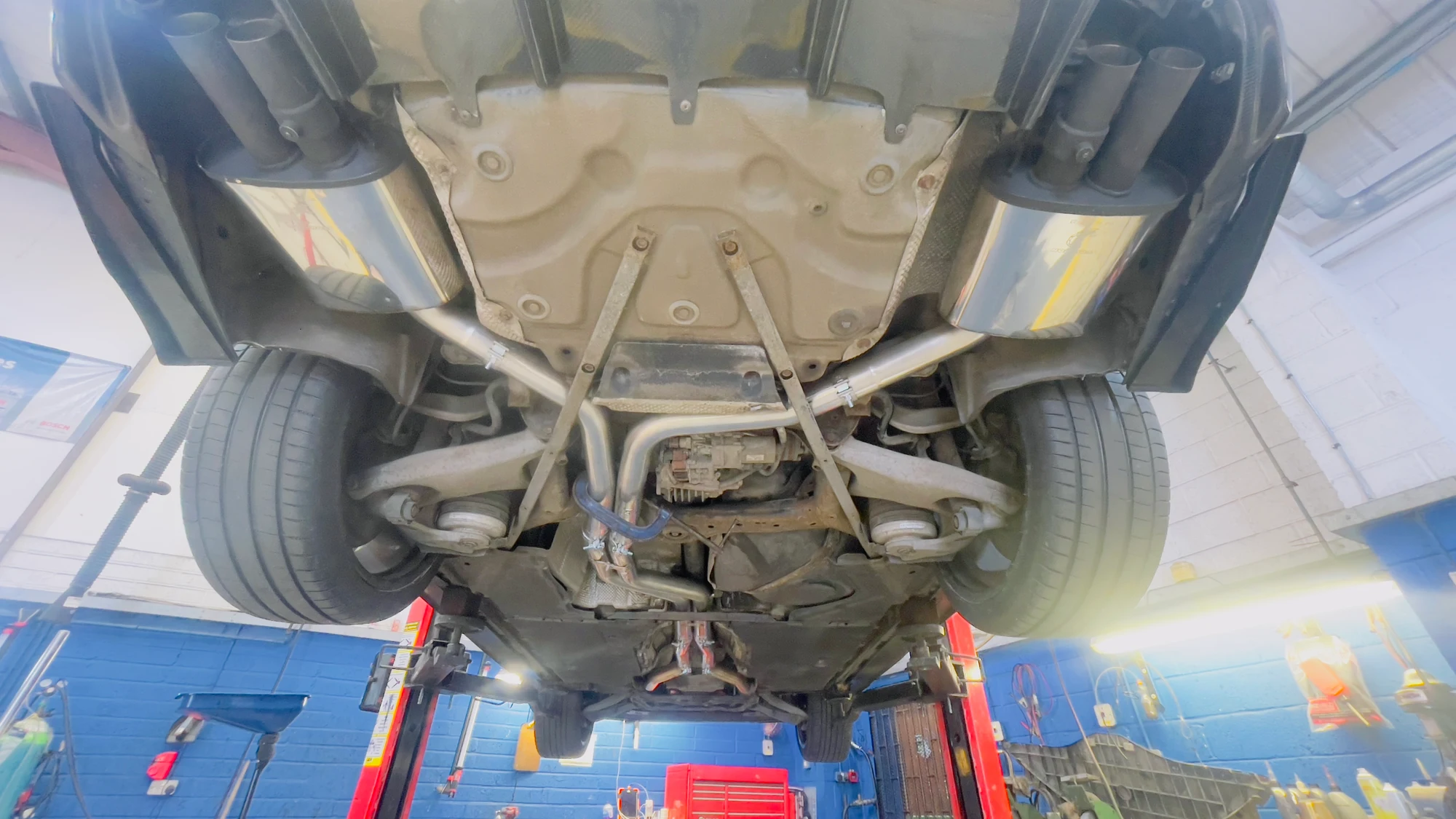
The exhaust has evolved through several configurations as the car’s output and character changed. The build records include a Scorpion valved cat-back and in-house fabricated tone-shaping work. The aim is to explain the actual development route without presenting every earlier component as if it remains fitted today.
- Valved cat-back development to provide different sound characters
- Bespoke fabricated sections used during sound and layout development
- Manifold, pipe-routing, mounting and clearance work considered as part of the system
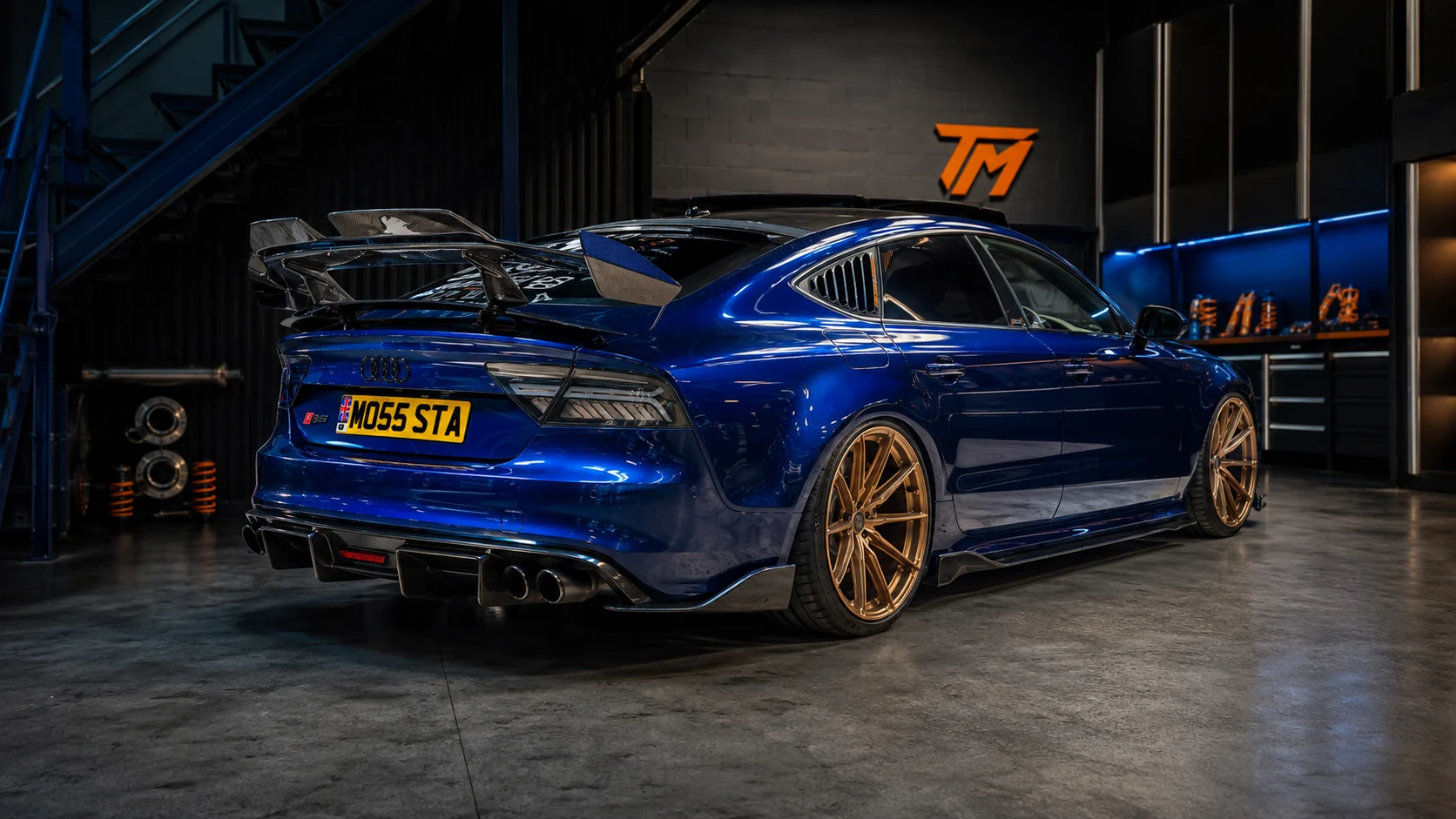
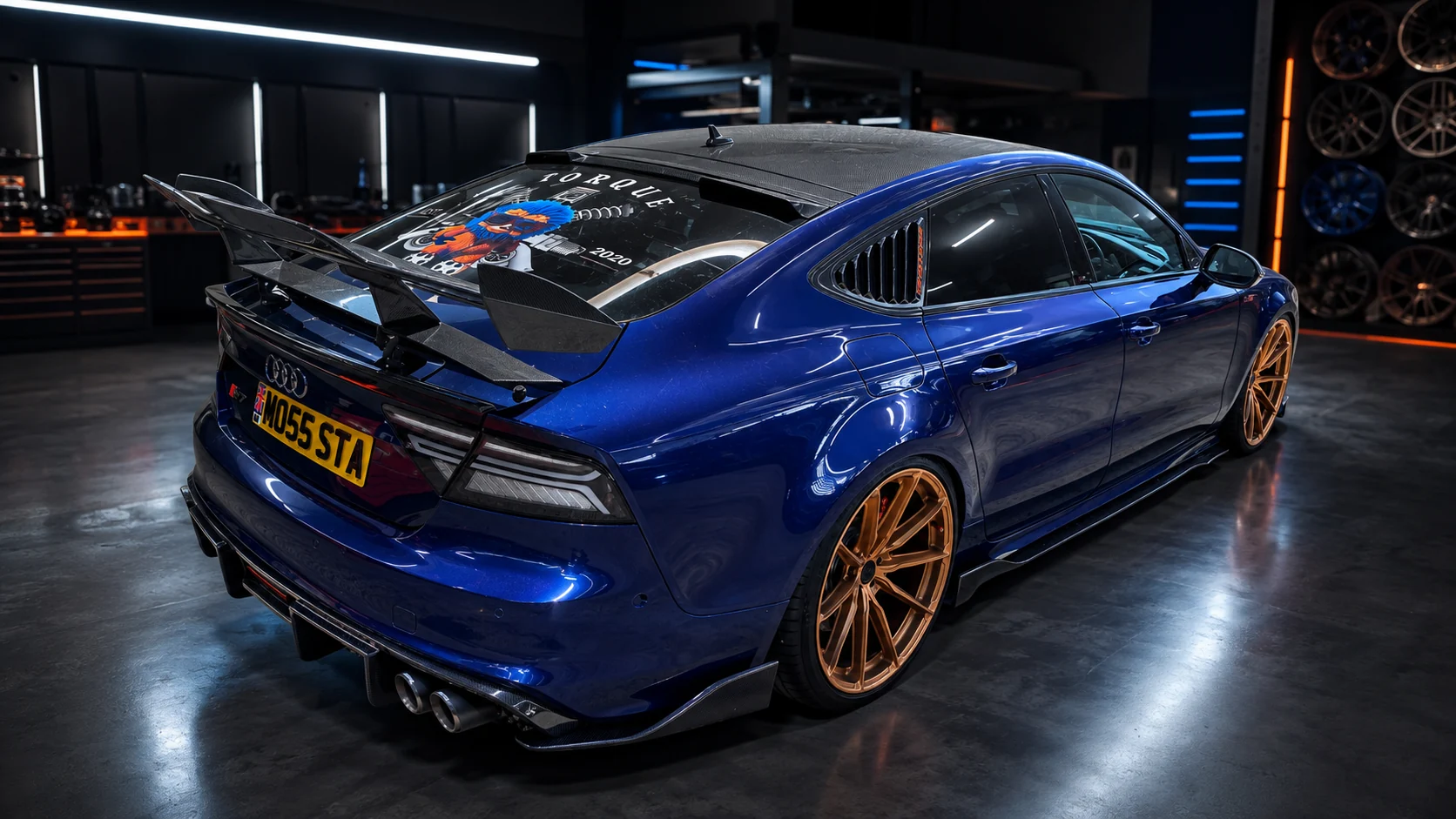
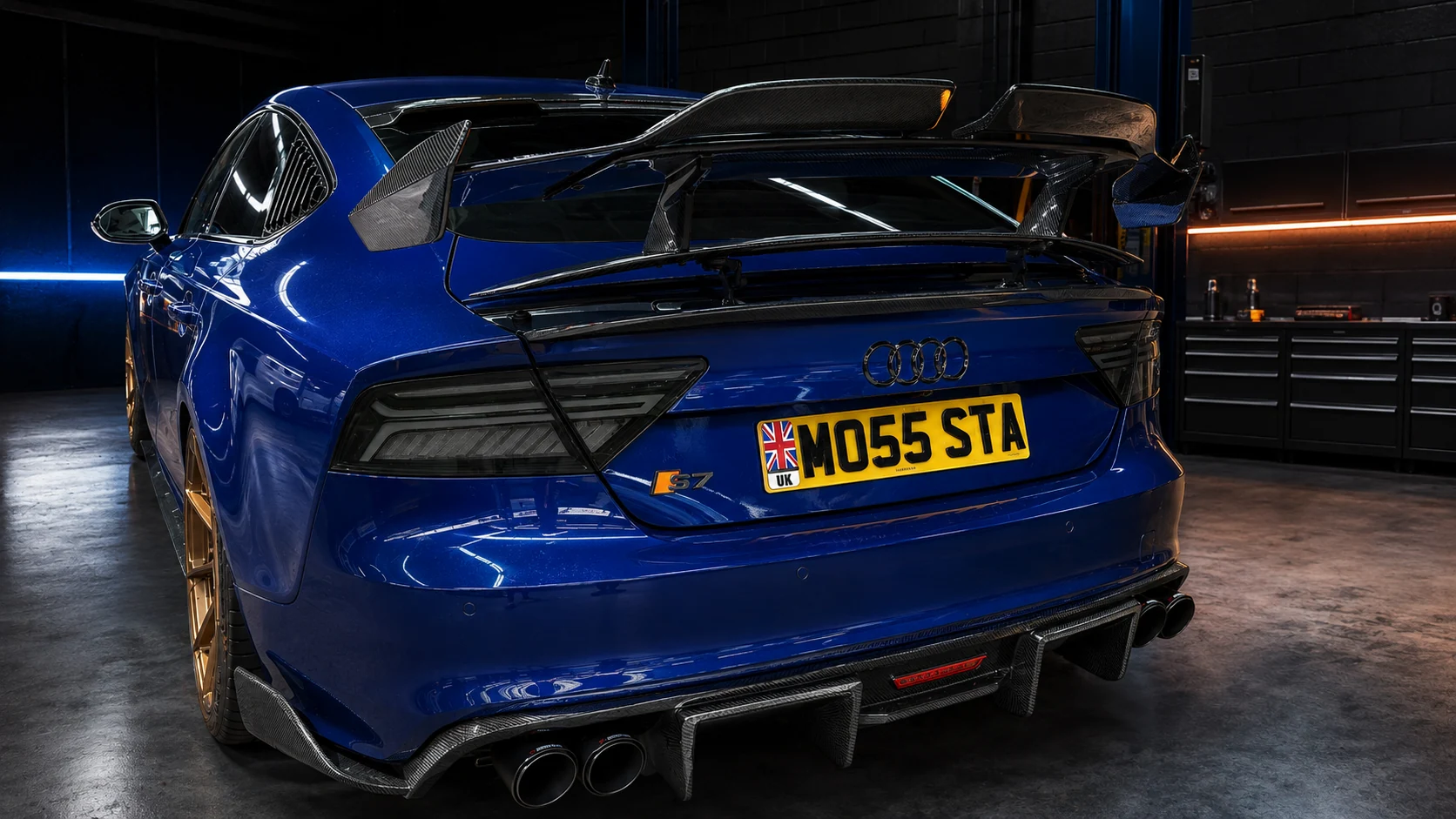
- Quad-tailpipe presentation integrated with the rear diffuser and bodywork
09The current exterior
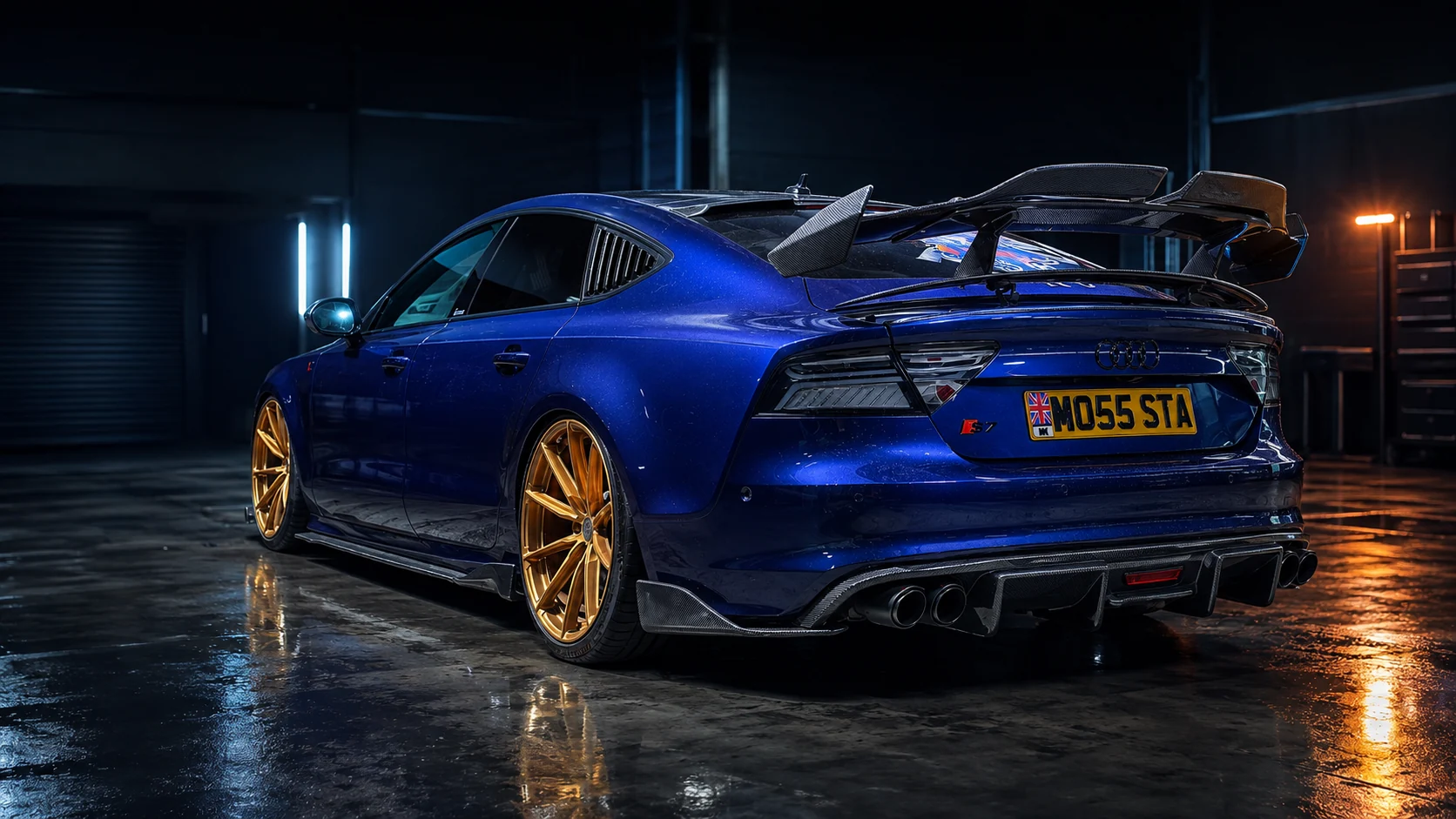
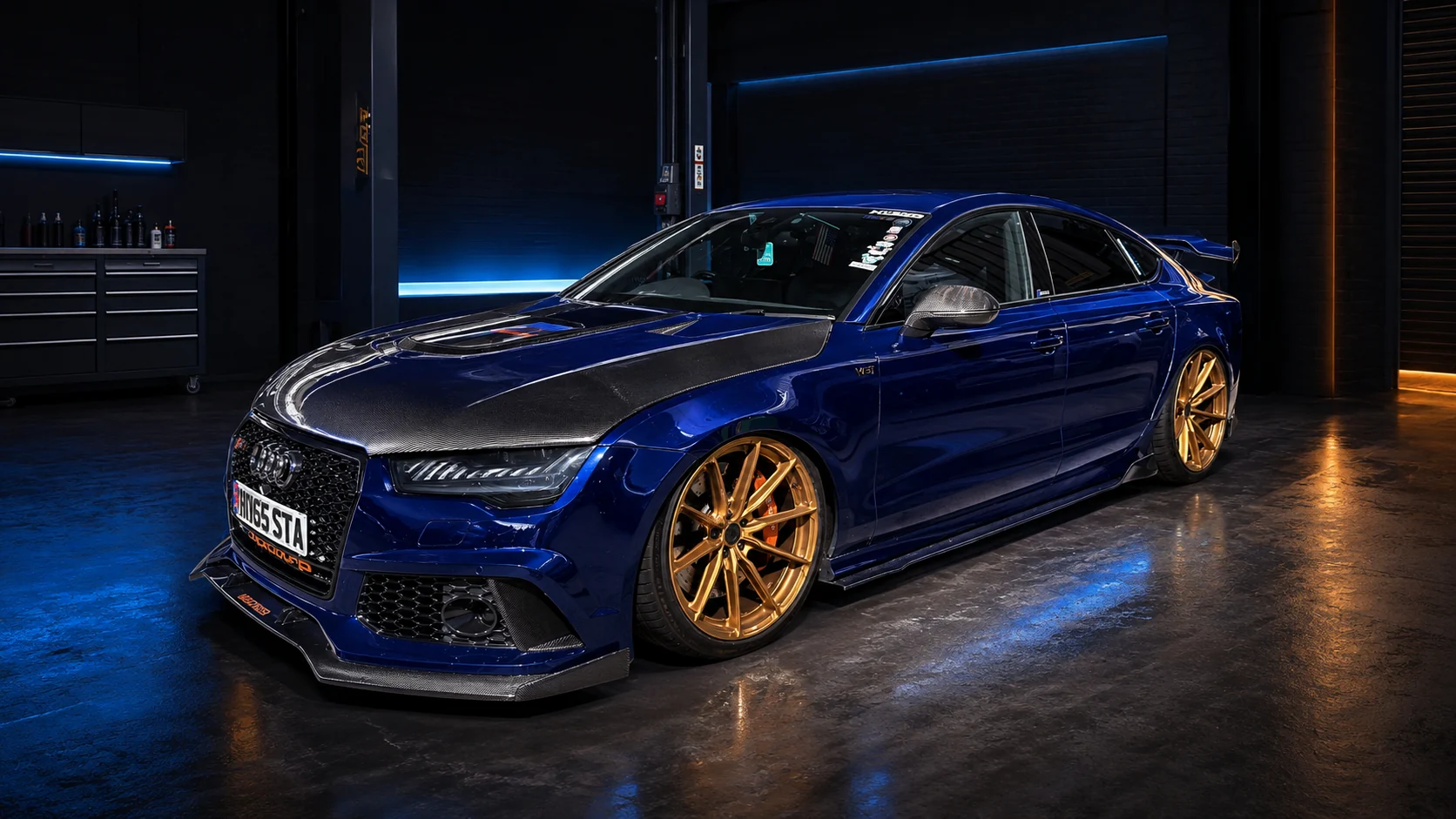
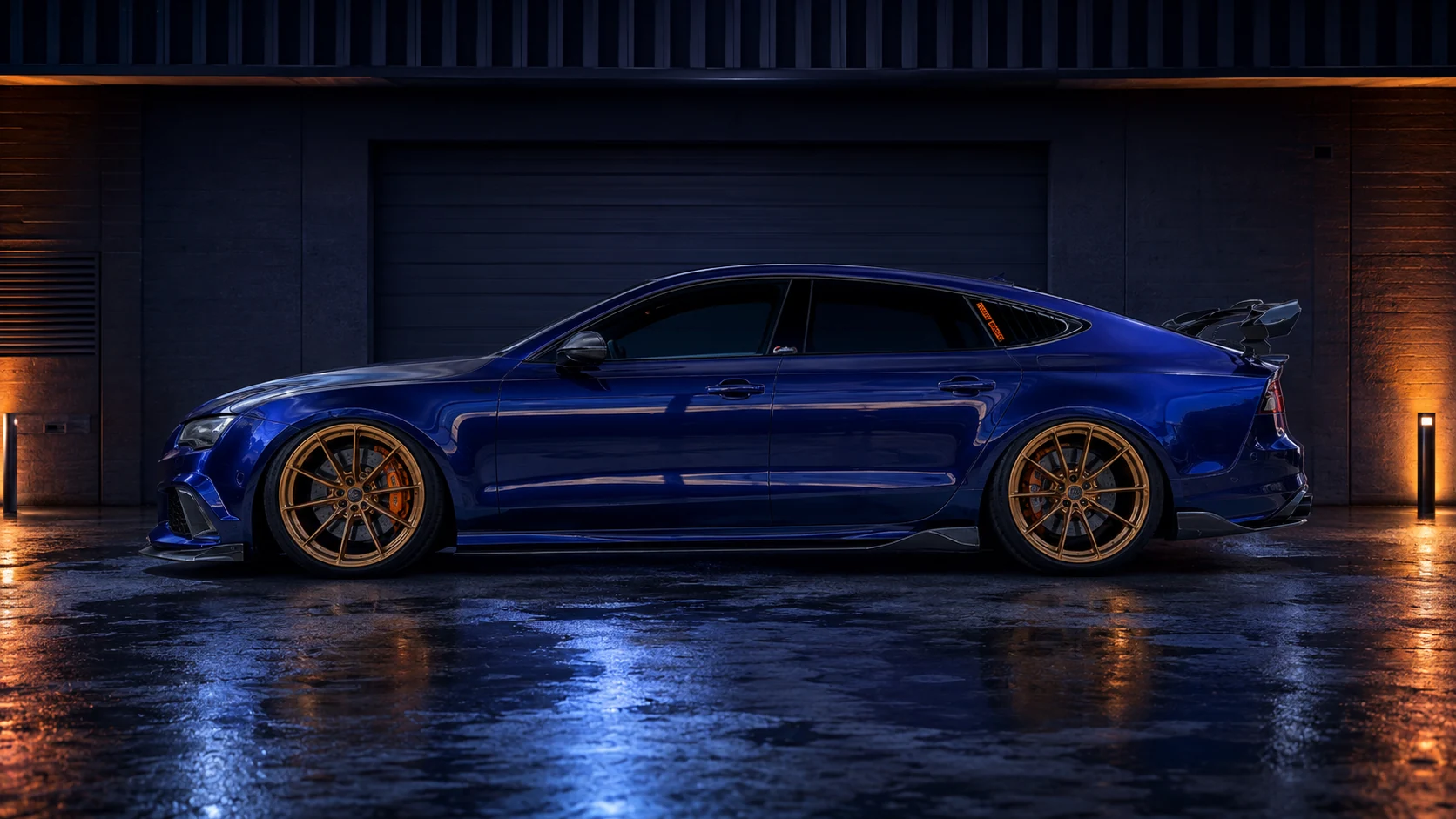
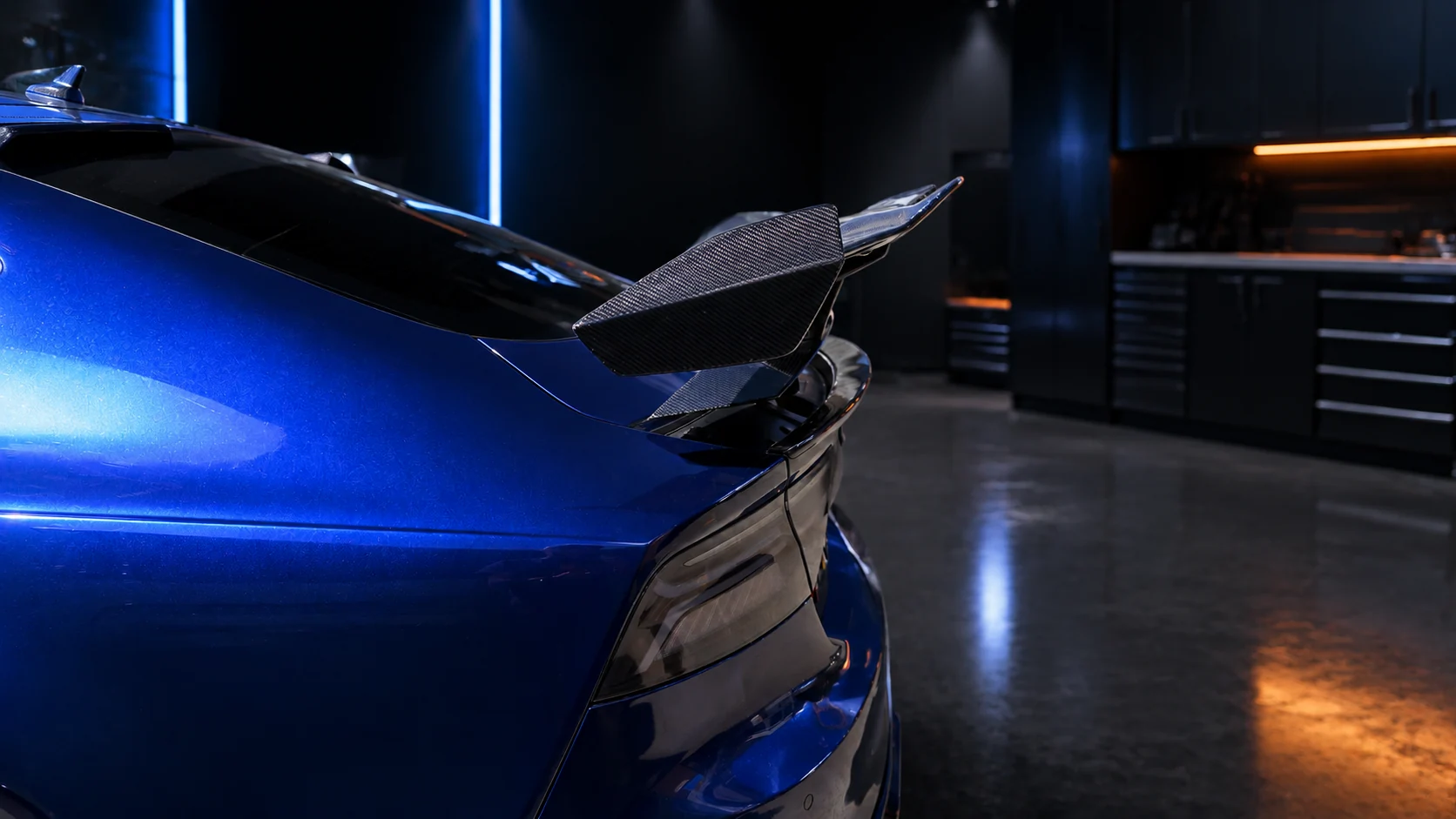
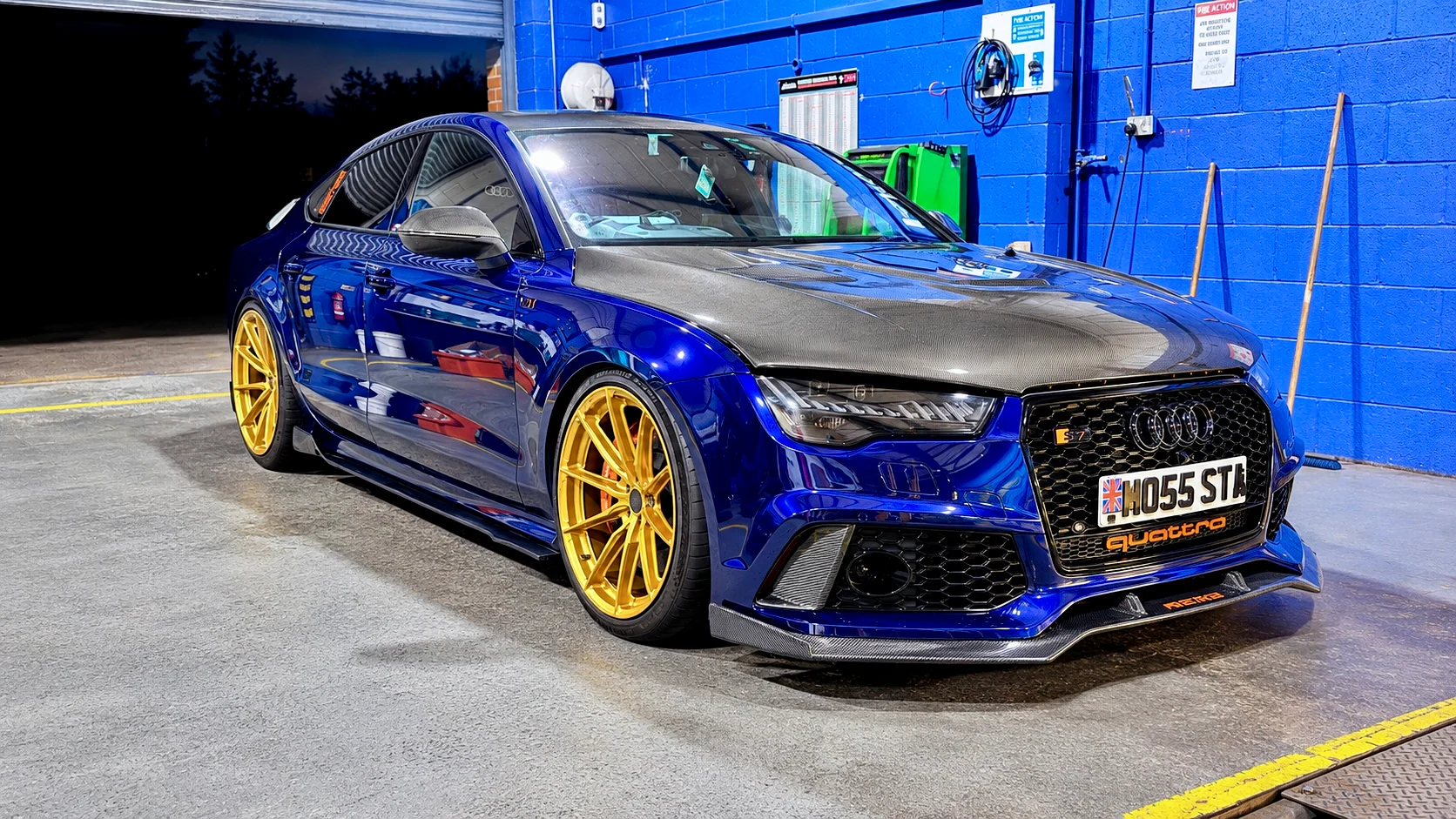
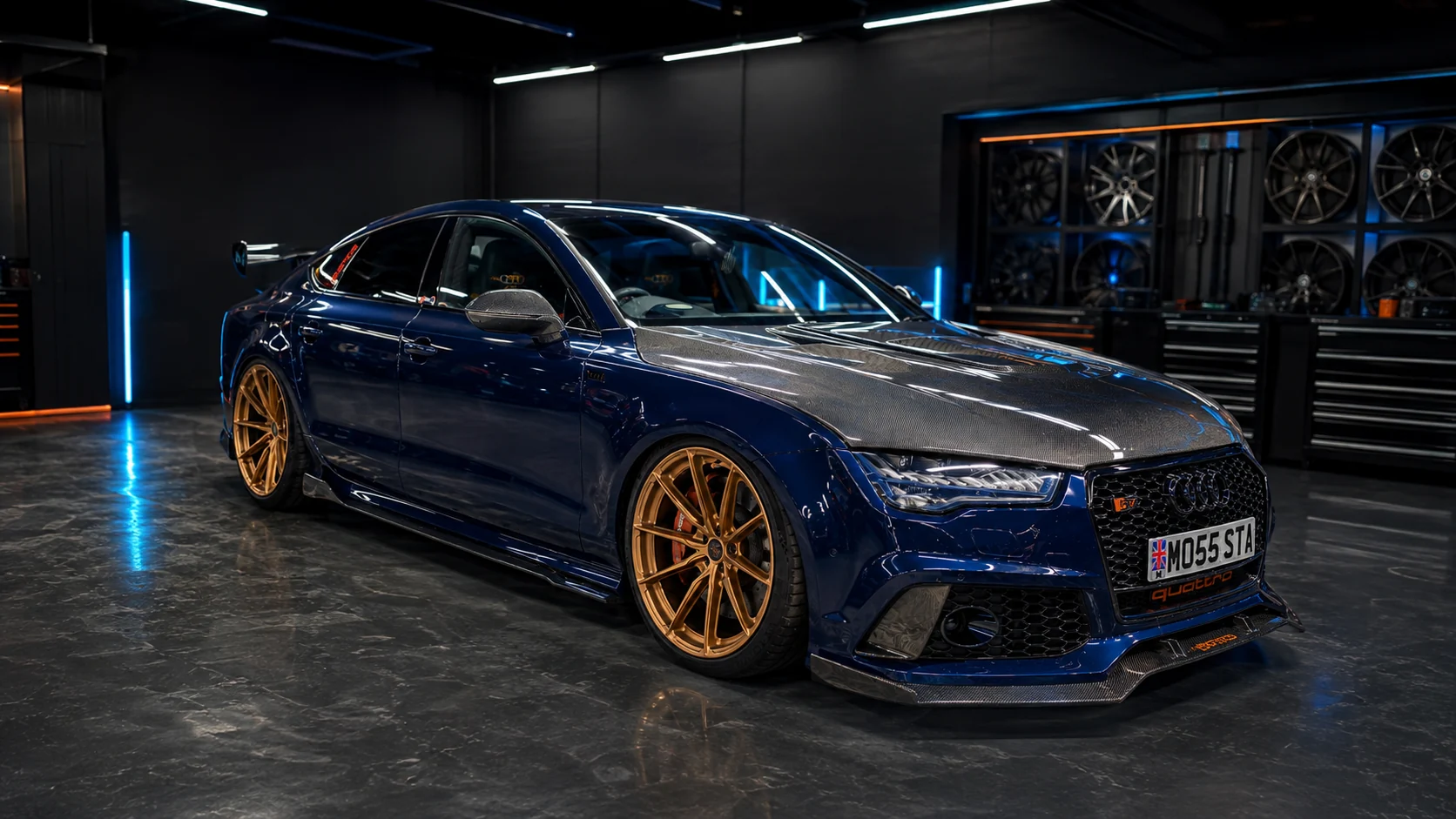
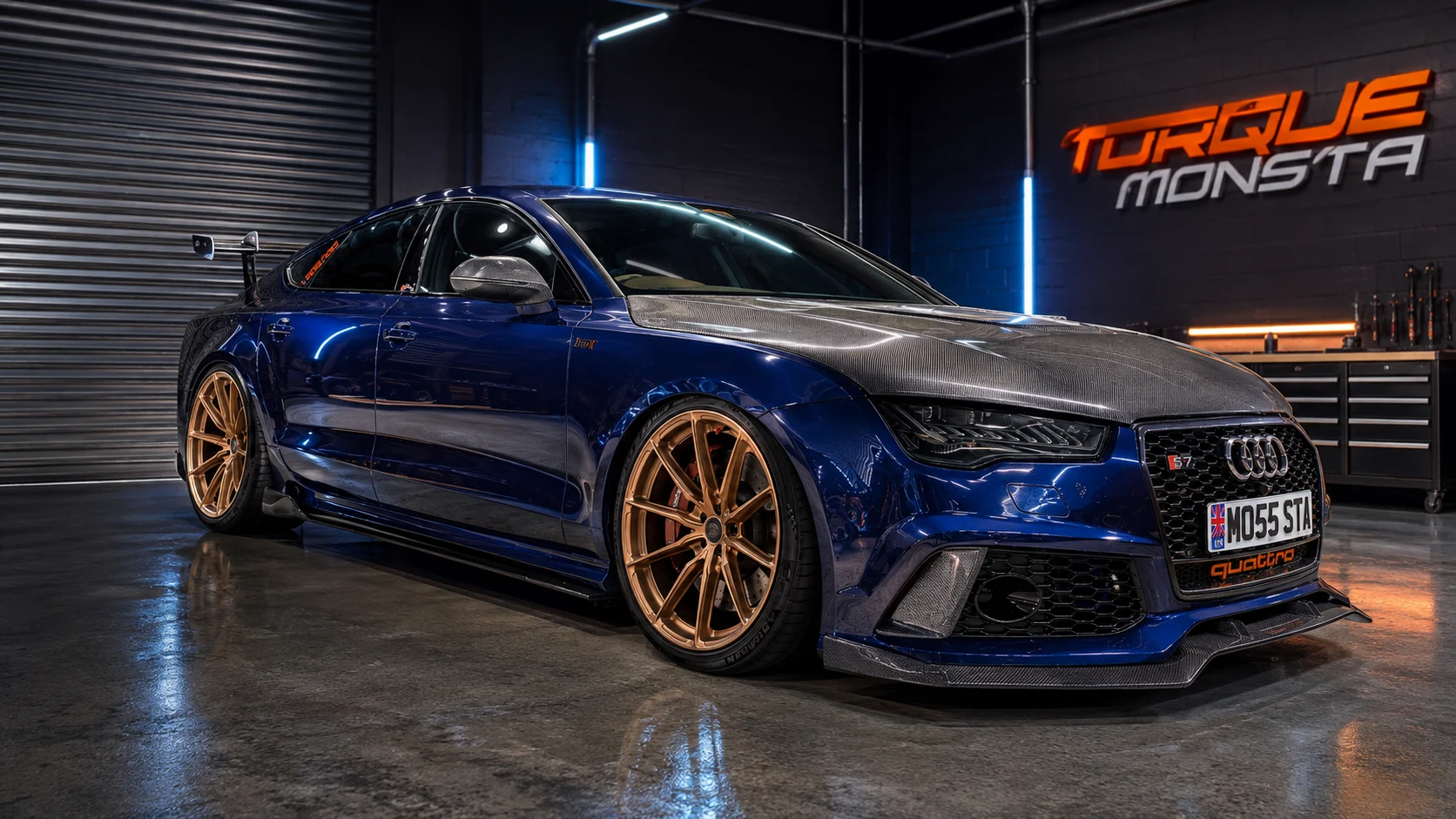
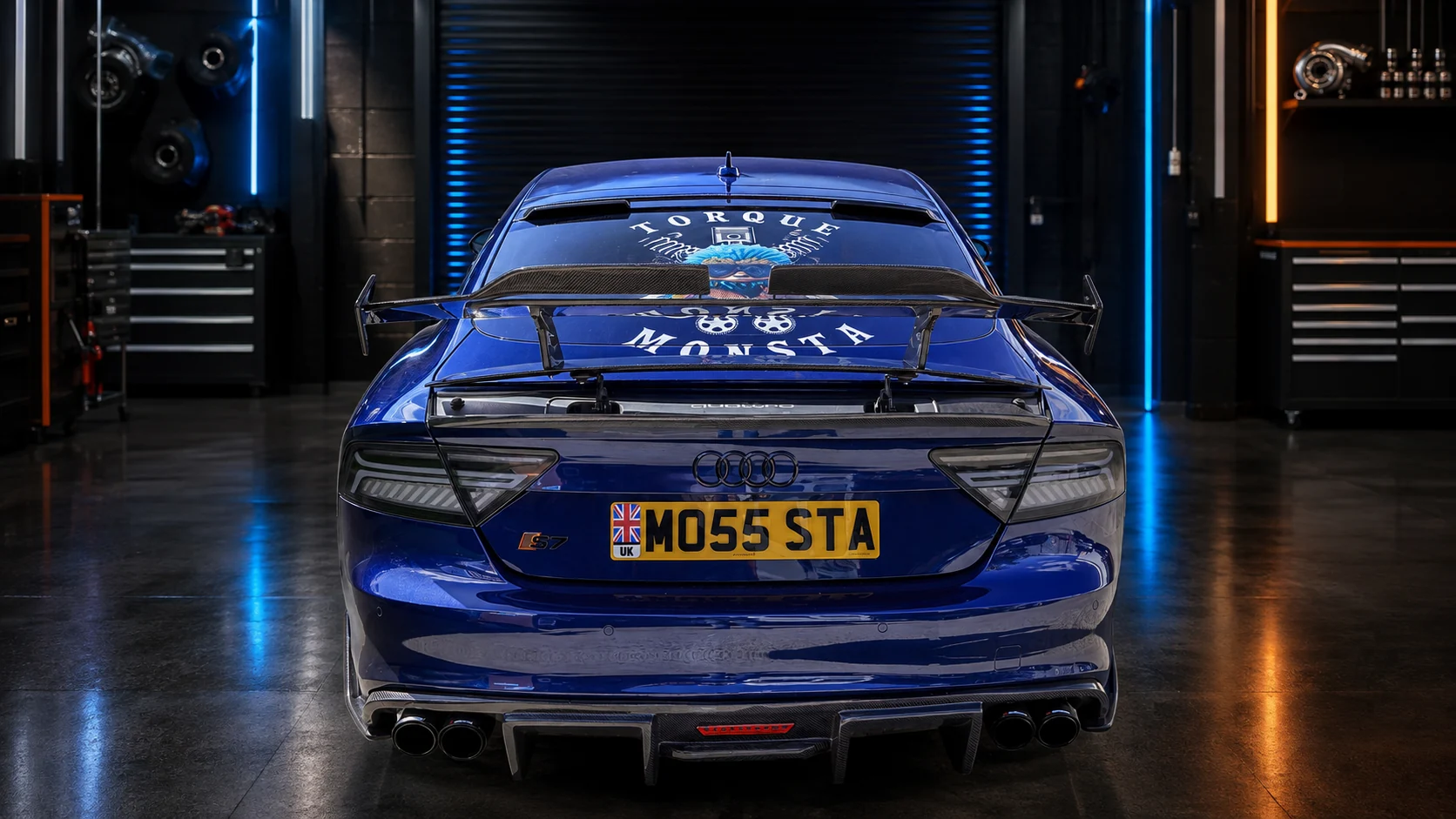
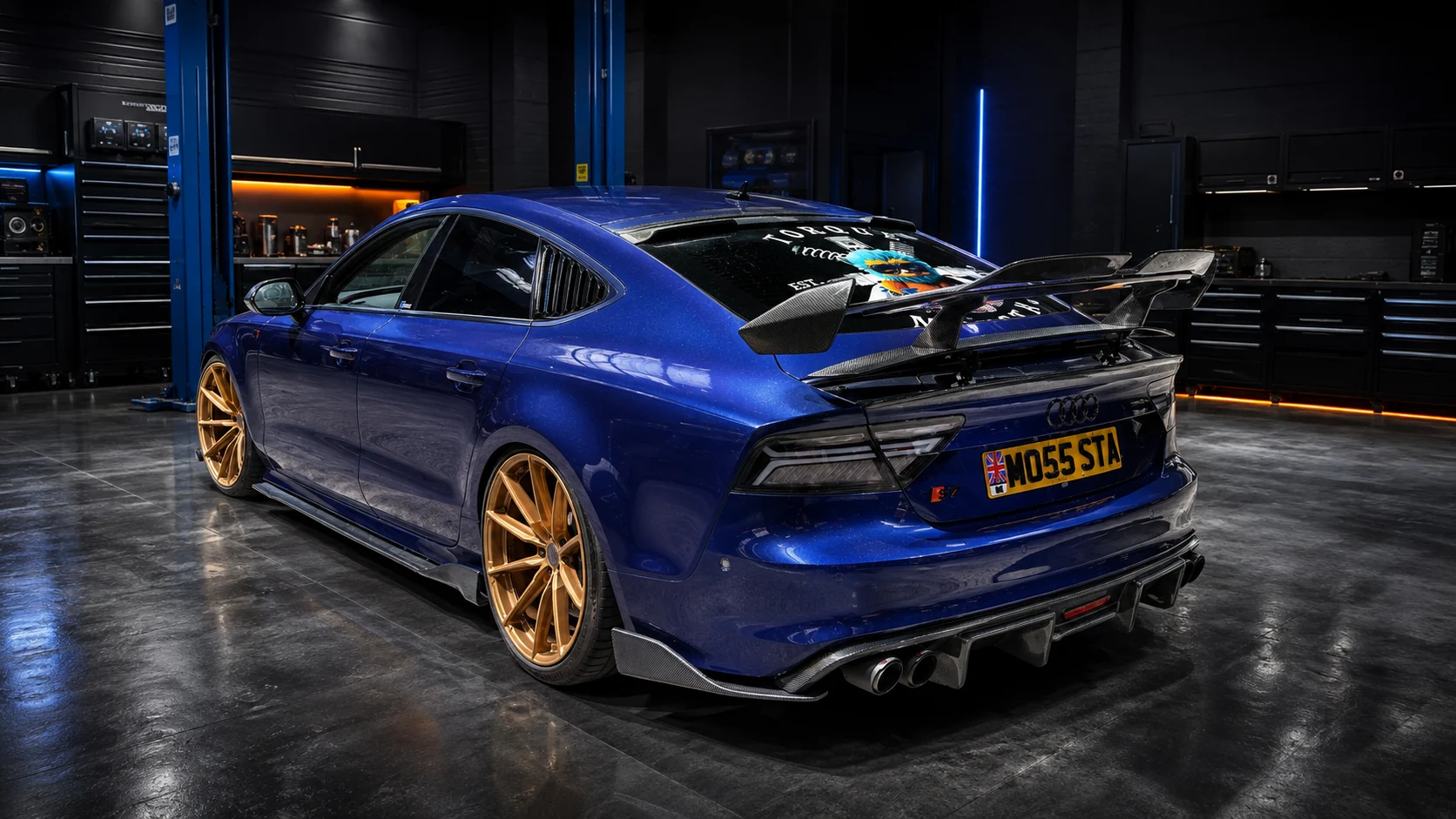
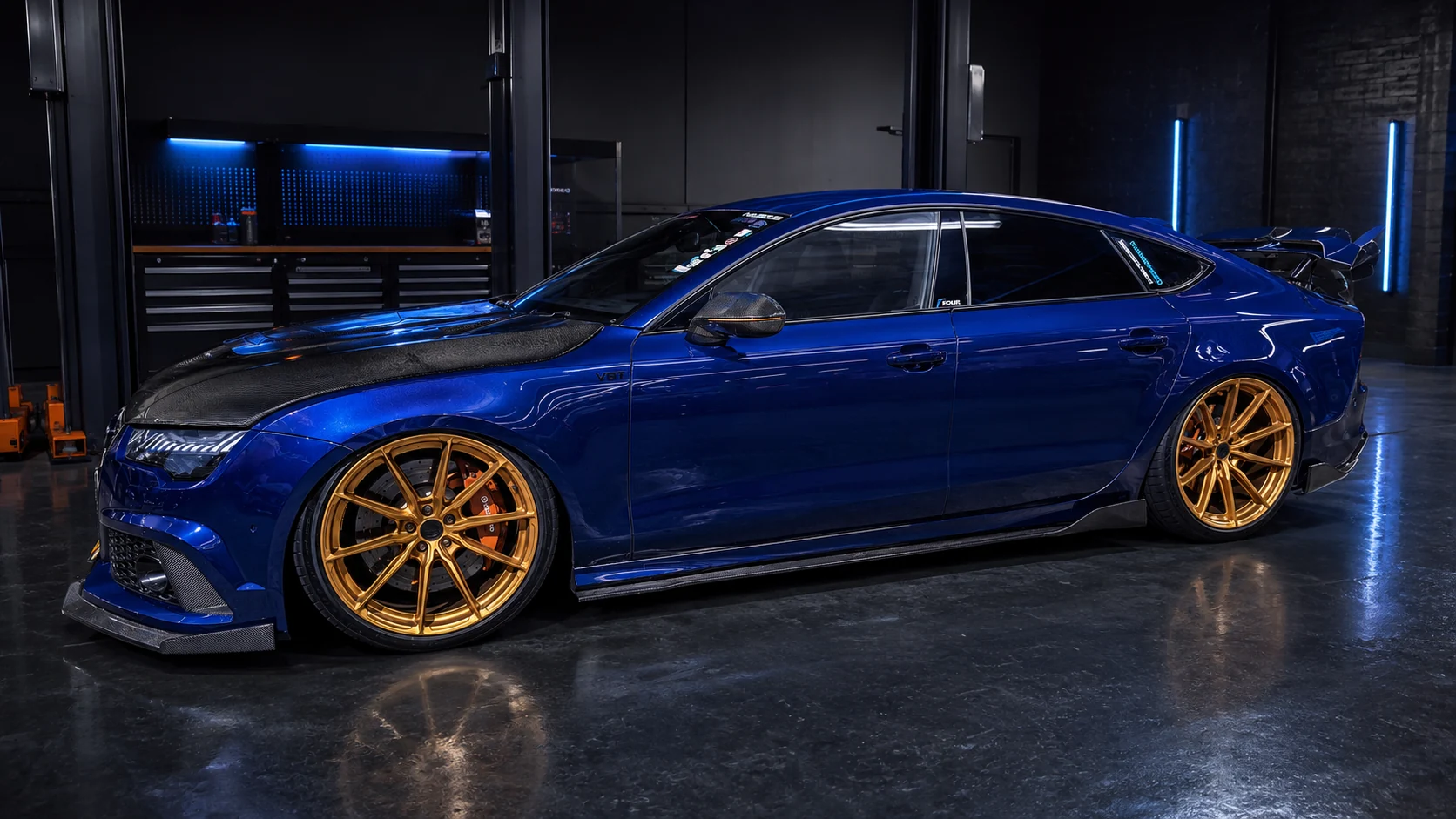
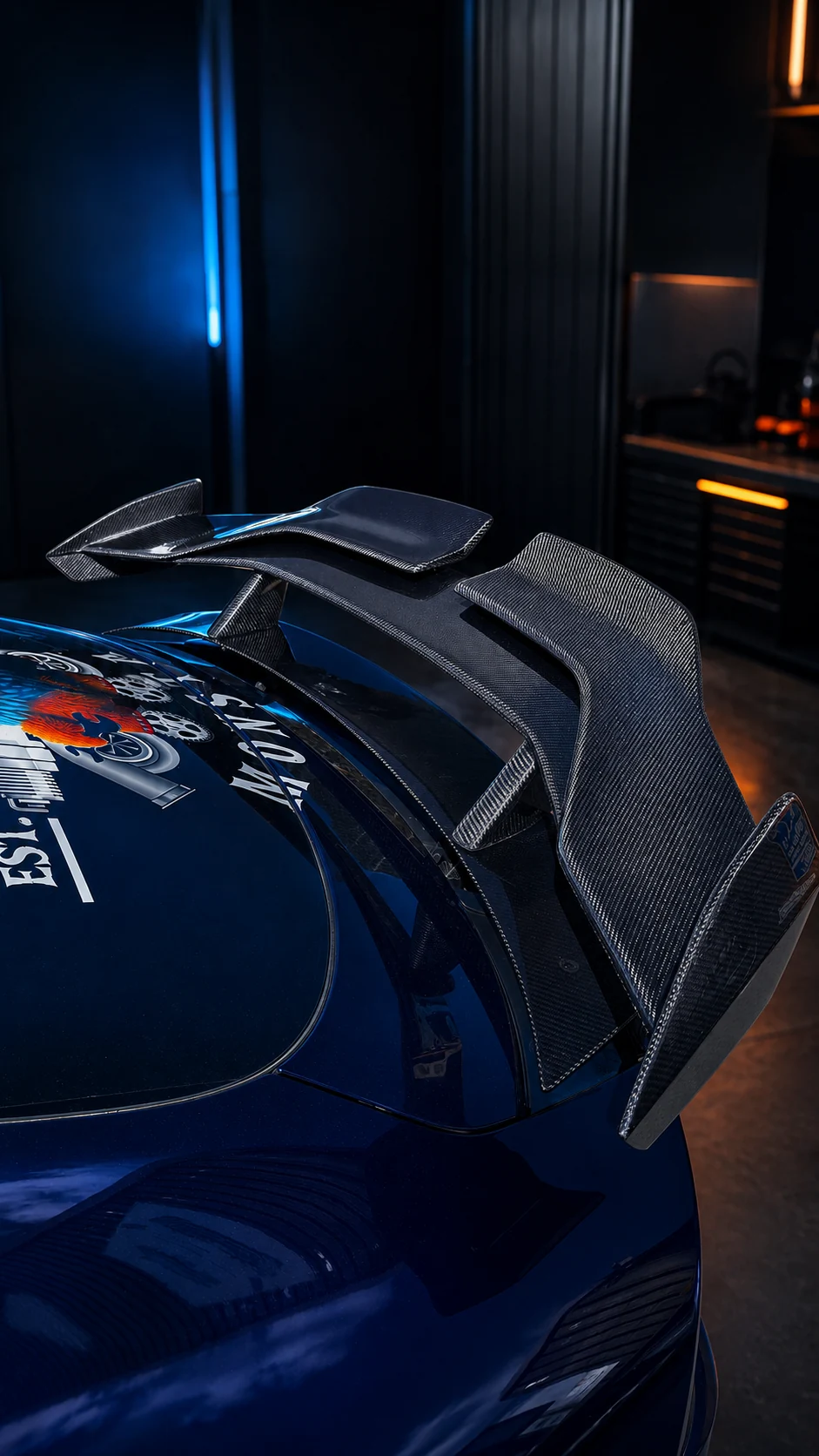
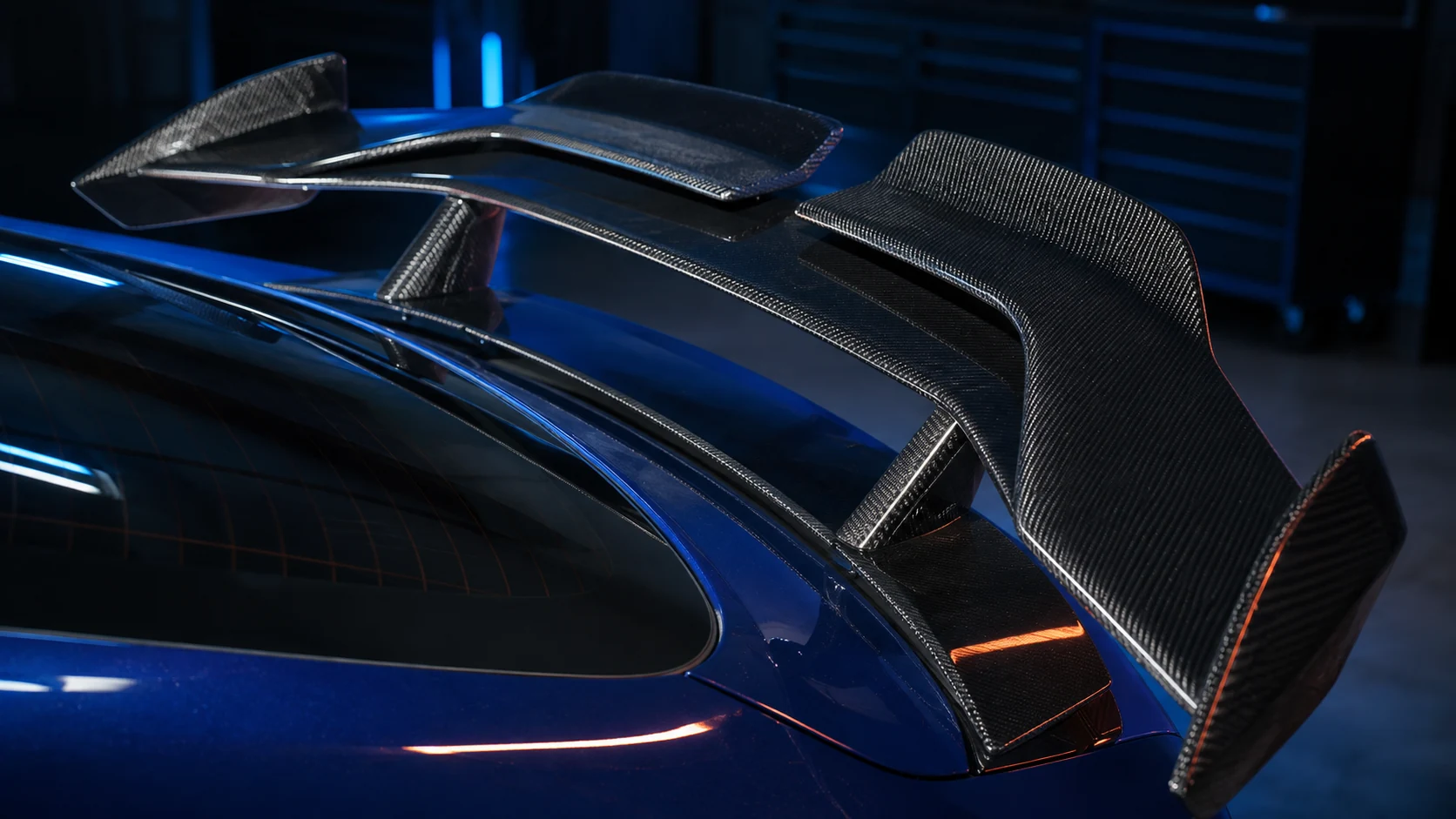
The newest form combines deep metallic blue paint, bronze 21-inch wheels and an extensive carbon package. The defining rear feature is now the large two-level carbon split wing, working visually with the roof spoiler, rear glass graphic, diffuser and quad-tailpipe layout.
- RS7 C7.5 front-end conversion and C8-style lighting
- Vented carbon bonnet with viewing detail
- Carbon splitter, canards, skirts, ducts and diffuser elements
- Large multi-level carbon split rear wing with sculpted endplates
10Cabin, control and everyday use
Inside, the S7 keeps its executive-car usability while adding more direct control and information. Carbon trim and a driver-focused steering wheel sit alongside live data, upgraded infotainment and a starlight headlining. The rear seats and luggage space remain part of the original daily-use brief.
- Carbon steering wheel with F1-style shift-light display
- BTRes vehicle display and map-control integration
- Carbon interior trim, ambient lighting and upgraded 12-inch screen
- Starlight headlining, four usable seats and retained luggage space